There is a restlessness in the Gospels that we sometimes forget.
We prefer the gentle shepherd, the kindly healer, the one who blesses children and speaks of lilies in the field. And He is that. But He is also the one who overturns tables, who slips through the grip of those who would stone Him, who walks on water and tells the storm to be still.
This is not a tame Christ. This is a Christ who cannot be managed, who will not be boxed in by our categories or our certainties. This is the Christ who comes like the wind—unpredictable, untameable, yet always carrying the fragrance of love.
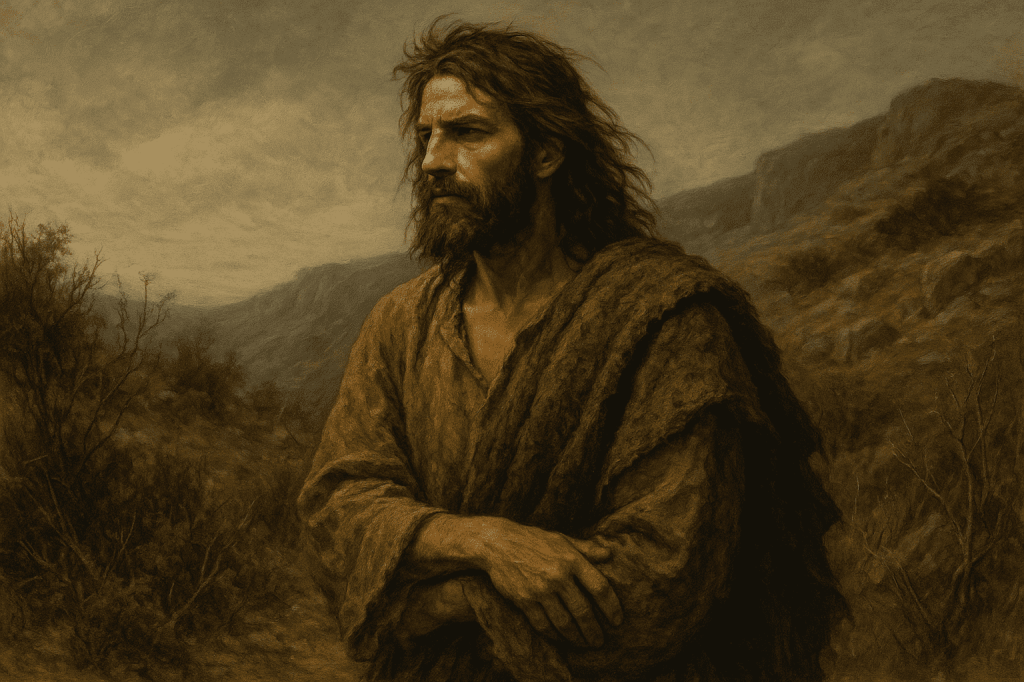
The Temptation to Contain
We human beings long for safety. We build walls, systems, theologies—boxes we can put God in so we feel we understand Him.
But the prophets already warned us:
“My thoughts are not your thoughts, nor are your ways my ways, says the Lord. For as the heavens are higher than the earth, so are my ways higher than your ways.” (Isaiah 55:8–9)
And still, we try. We argue about who is in and who is out. We create rules to limit the reach of love. But all the while, God slips through our fingers like water.
The Untamed Jesus
Read the stories closely and you will see it: Jesus constantly breaking the boundaries people set.
- Healing on the Sabbath, choosing love over law.
- Speaking with the Samaritan woman at the well, shattering cultural and religious barriers.
- Lifting up a hated outsider—the Good Samaritan—as the hero of mercy.
- Pointing to the faith of a Roman centurion and saying, “I have not found such faith in all Israel.”
This is a Christ who refuses to be claimed by any single group, who shows that the Spirit moves far beyond our lines. “The wind blows where it chooses… you hear the sound of it, but you do not know where it comes from or where it goes” (John 3:8).
A Parable of Perspective
I once heard a story about several people standing around an elephant in the dark. Each touched a different part: one felt the leg and said, “This is a tree.” Another touched the ear and said, “This is a fan.” Another felt the trunk and said, “This is a snake.” They argued fiercely, each convinced they were right.
Then the dawn came, and the elephant was seen for what it was. Each had touched a part of the truth, but none had held it all.
Is it not the same with the Divine? We glimpse a facet here, a whisper there. Our danger lies not in seeing too little, but in believing that our glimpse is the whole.
The Celtic Vision
The early Celtic Christians understood something of this wildness. They saw God not only in church walls, but in sea and sky, in firelight and storm. They spoke of the Holy Spirit not as a dove but as a wild goose—beautiful, fierce, and utterly free.
In their prayers and poems, Christ was both close and vast. The one who dwells in the heart, and the one who walks the hills at night. The one who is found in the hearth-fire, and the one who roars in the ocean’s waves.
They knew that to walk The Way was not to control God, but to let go, to be led, to be changed.

An Invitation
The wild Christ is not safe. He will not be put in a box. He will not be used to prop up our fears. But He is love. He is freedom. He is the one who calls us out of certainty and into trust.
So perhaps the question is not, “Can I contain Him?”
The question is, “Am I willing to be changed by Him?”
For today, let us not fear. Let us walk into the mystery with open hearts.
Let us follow the wild Christ—untameable, unboxed, and utterly real.
✨ The gates are open. The wind is blowing. The Christ we cannot tame is calling us onward.


Leave a Reply