There are moments in the year when time itself feels thinner, as though we are standing at the edge of something old and something new. Imbolc is one of those moments—a whisper between winter’s silence and the promise of spring. But what is Imbolc, truly? Was it a great pre-Christian festival, later reshaped into Saint Brigid’s feast day? Or was it always a quiet moment of transition, holding within it the deep wisdom of change? In the this the first of three articles I will explore Saint Brigid’s life and legacy.
Imbolc: A Time of Seasonal and Spiritual Transition
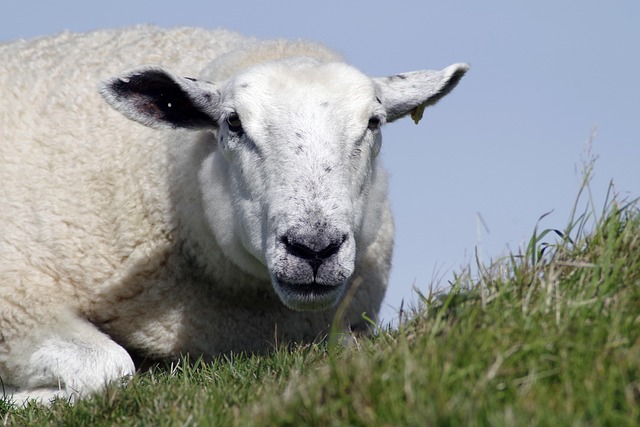
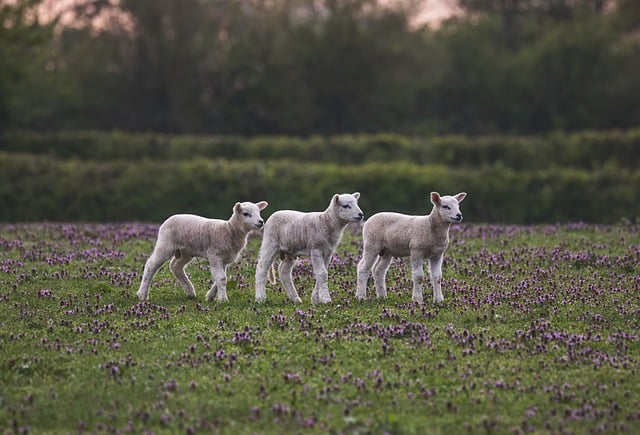
Imbolc, traditionally observed around February 1st, is a festival long associated with the first stirrings of spring. The name itself is believed to derive from the Old Irish i mbolc, meaning “in the belly,” referring to the time when ewes begin to lactate, signaling the renewal of life. The land, though still cloaked in winter’s chill, subtly shifts—buds tighten on branches, the days lengthen, and beneath the soil, unseen movement begins.
Spiritually, Imbolc represents a threshold—a liminal space. It is a time of becoming, of emergence, of being neither fully here nor there. For the Celtic peoples, thresholds were powerful places, both in the physical world (doorways, crossroads, riverbanks) and in the soul’s journey. To stand at a threshold is to stand in the unknown, to glimpse both what has been and what is yet to be.
Imbolc: Was It a Pagan Festival?

Many today claim that Imbolc was a grand pre-Christian festival, but the truth is more nuanced. Unlike Samhain, Beltane, and Lughnasadh, which appear clearly in medieval Irish texts as major gatherings, Imbolc is less explicitly described as a structured festival in early sources. What we do have are references to this time of year as a moment of agricultural and cosmic significance.
It is possible that Imbolc was not a large-scale festival in ancient Ireland, but rather a period of sacred transition, marked quietly in homes and by those attuned to the land’s rhythms. This is important because it shifts our perspective: rather than seeing Imbolc as a lost festival now reconstructed, we might instead see it as a moment in time that always carried meaning, one that later found a more formal expression in Christianity through Saint Brigid.
Brigid the Goddess, Brigid the Saint: A Continuity of Sacred Tradition?
In the weaving together of Christian and pre-Christian traditions, Brigid stands as a figure of profound continuity. The Irish goddess Brigid was associated with healing, poetry, wisdom, fertility, and the sacred fire—all themes that later became attached to Saint Brigid of Kildare.
Did Saint Brigid emerge as a purely historical figure, or was she a Christianized version of the older deity? The answer may lie somewhere in between.
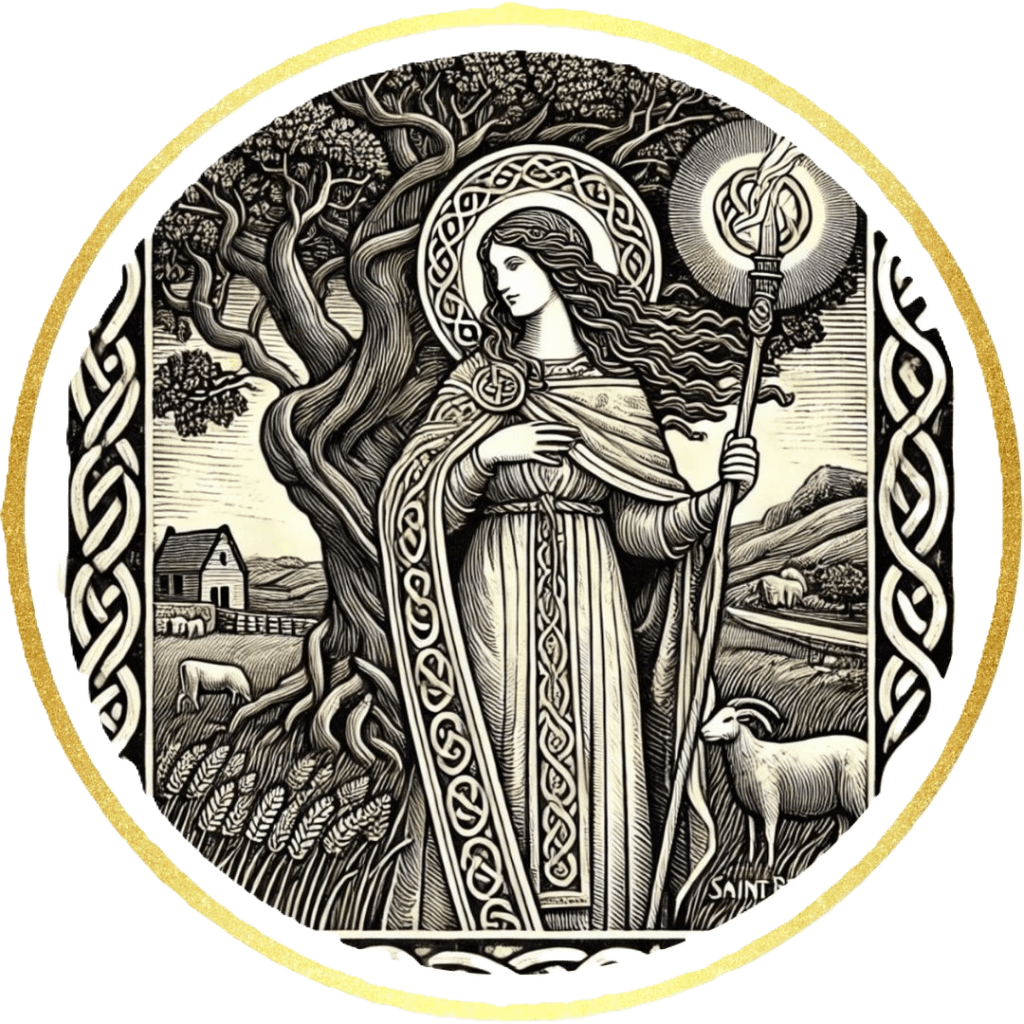
Saint Brigid (c. 451–525 AD) was a monastic leader, healer, and protector of the poor, known for her generosity and the miracles attributed to her. Her monastery at Kildare housed an eternal flame tended by nuns, mirroring the sacred fires once kept in honor of the goddess Brigid. The intertwining of their attributes suggests that while Saint Brigid was indeed a real historical person, her story absorbed and transformed elements of the older traditions surrounding the goddess.
This continuity is not about deception, but rather about the organic evolution of spiritual understanding. The ancient world was not as rigid in its divisions as we often imagine today. The people who revered Brigid before Christianity likely saw no contradiction in continuing to honor her within the new faith. Christianity did not erase Brigid—it baptized her, transforming her into a saint but preserving her essence.
Celtic Christian Mysticism and the Power of Thresholds
Celtic Christian spirituality carries within it a deep respect for liminal spaces—the places between, where heaven and earth seem to touch.
Monastic settlements were often built near rivers, on islands, or at crossroads—physical representations of spiritual in-betweenness. The thin places of Celtic tradition, where one feels closer to the divine, mirror the very essence of Imbolc. It is a time when new life is still hidden yet already forming, much like the spiritual journey of transformation.

Imbolc invites us to lean into this in-betweenness, rather than rush through it. In our own lives, how often do we stand at a threshold—between jobs, between relationships, between identities? These moments can feel unsettling, but they are also sacred. Just as the land does not rush the arrival of spring, we too are called to honor the unseen work happening beneath the surface of our lives.
Brigid: A Guide Through Change
Brigid, both saint and goddess, is a keeper of transitions. She guides the land from winter to spring, the soul from old to new, and the seeker from uncertainty to wisdom.
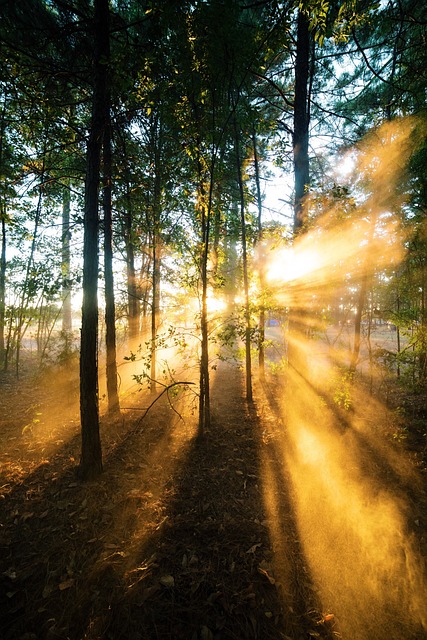
One of the lesser-known stories of Brigid speaks to this role. It is said that she once traveled to visit a sick woman, and upon arriving, she hung her cloak on a sunbeam, where it remained, unmoving. This miraculous act reminds us that in times of transition, we are not unsupported. There is always a light to hold us, even when we cannot yet see the way forward.
Honoring Our Own Thresholds
As we at St Brigid’s Day, how do we honor the thresholds in our own lives?
- Pause and acknowledge where you are. Change is not an event—it is a process. Before moving forward, take a moment to truly recognize the transition you are in.
- Tend your inner fire. Brigid’s fire is both literal and metaphorical. What keeps your spirit warm during uncertain times? What practices sustain your light?
- Trust what is unseen. Just as the seeds of spring are already growing beneath the soil, your own transformation is already unfolding, even if you cannot yet see it.
- Step forward with courage. Brigid’s essence is one of fierce compassion—she calls us to move into new seasons with both strength and grace.
Conclusion: Walking Through the Veil
Imbolc, whether seen as an ancient festival, a monastic feast, or simply a natural moment of transition, reminds us of a universal truth:
We are always in motion. We are always becoming. We are always standing at the edge of something new.
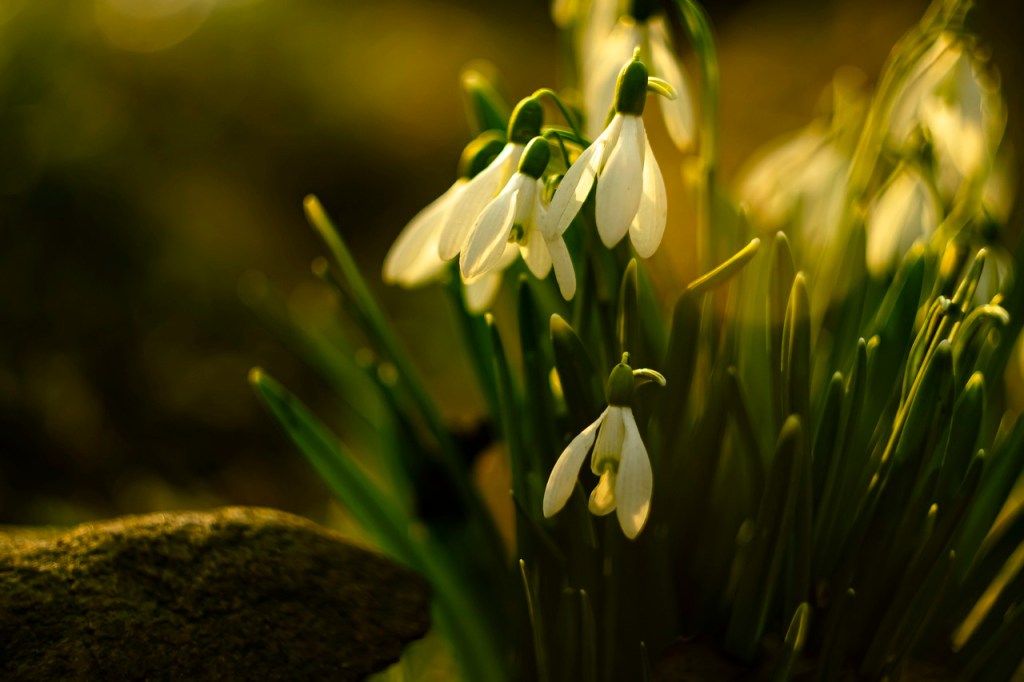
Brigid, in her many forms, stands at this threshold with us. She is the fire that does not burn out, the sunbeam that holds our cloak, the promise that spring is already stirring in the belly of the earth.
So as we move through our own thresholds, may we carry her wisdom. May we honor the unseen. And may we always, always, keep our fires burning.

 Ancient Whispers
Leave a comment