There is a temptation that follows every living spiritual tradition as it ages: the temptation to explain itself to death. Systems are refined, symbols multiplied, layers of interpretation added until the original pulse becomes difficult to feel beneath the weight of commentary. What begins as a way of being becomes a body of ideas about that way of being. Druidry, like many paths, has not been immune to this pressure.
Yet when we step back from modern reconstructions and look toward the deeper instinct that shaped the old traditions of these islands, something remarkably consistent emerges. Wisdom was not primarily something to be accumulated. It was something to be entered. Knowledge was not an object to be possessed but a relationship to be lived.
The early bardic tradition offers a quiet clue here. In the poetry attributed to Taliesin, wisdom is not presented as a collection of facts or an elaborate cosmology. Instead, it is relational, fluid, and participatory. “I have been a word among letters,” he says—not a library, not a doctrine, but a single utterance moving within a larger living language. This is not the voice of someone cataloguing reality; it is the voice of someone inhabiting it.
This orientation toward lived knowing rather than intellectual mastery was central to the Druidic ethos. Classical sources tell us that Druidic teaching was oral and experiential, deliberately resistant to being written down. This was not because writing was unknown, but because the act of memorisation, recitation, and presence shaped the soul differently. To learn was to be changed. To know was to become.
The same principle appears, unexpectedly but clearly, in the craft of close-up magic. The strongest effects are rarely achieved through complexity. They arise from clarity, timing, and complete presence. The more the performer’s attention is scattered by elaborate method, the weaker the effect becomes. Simplicity sharpens focus; focus creates impact. Spiritual practice follows the same law. When attention is diffused across symbols, explanations, and layered techniques, the centre of gravity is lost.
This is why the early Celtic Christian monks feel less like a rupture from Druidry than a transposition of it. The monastic communities of Ireland and the western isles carried forward the same instincts under a different theological language. Their lives were structured not around complexity but around rhythm, stillness, and direct encounter. Solitude was not a rejection of the world but a way of meeting it more honestly.
The monks of Skellig Michael lived on bare stone not as a dramatic gesture of asceticism, but because there was nothing there to distract them from attention. Prayer was simple, repeated, embodied. The landscape itself became the text. Silence was not an absence but a presence. These were not people attempting to understand God through abstraction; they were learning to stand where God could be noticed.
Early monastic sayings capture this ethos with startling economy: “Be alone. Be silent. Be at peace.” No metaphysical scaffolding. No elaborate spiritual theory. Just the conditions that allow truth to surface. It is difficult to improve upon this as a description of effective spiritual practice, whether one names it Druidic, monastic, or something else entirely.
Simplicity, in this light, is not a retreat from depth. It is a discipline of attention. It concentrates awareness, reduces the ego’s need to perform cleverness, and allows subtle movements of insight to be felt. When practices are simple, feedback is immediate. One knows whether something is alive or merely decorative.
Much modern Druidry, like much modern spirituality, risks confusing enrichment with accumulation. Myth is piled upon myth, symbolism upon symbolism, until the path begins to resemble a museum rather than a forest. Yet the old wisdom was never about constructing an impressive inner architecture. It was about learning how to stand rightly in relation to land, time, and self.
The quiet truth that emerges, again and again, across bardic poetry, monastic practice, and lived experience, is this: the map is never the territory. Systems can orient us, but they cannot replace presence. Complexity may impress the mind, but simplicity is what reshapes the soul.
Druidry, at its deepest, does not ask us to know more. It asks us to attend more fully. To listen. To stand still long enough for understanding to arise on its own terms. In an age addicted to explanation, that may be its most radical offering.
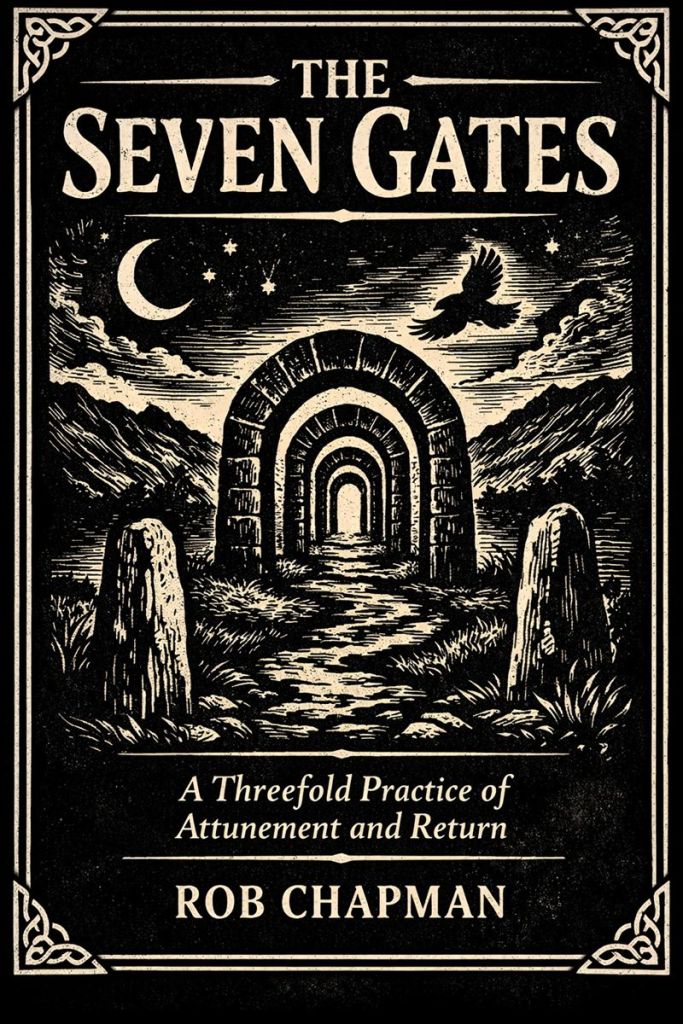
Discover this simple threefold practice and start your journey today
 Ancient Whispers
Leave a comment