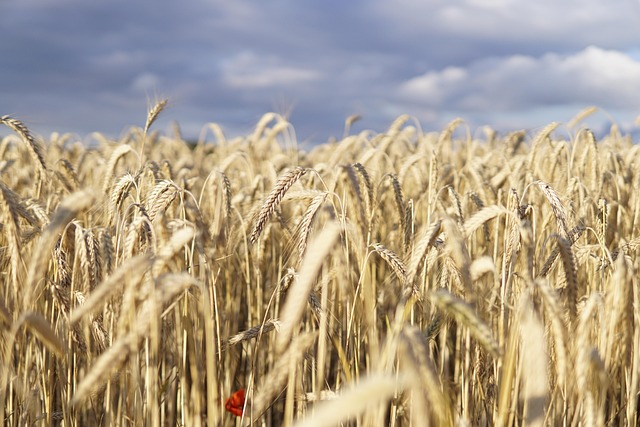
There are days when the turning of the earth becomes visible — not in the calendar, but in the feel of things. The light thickens. The air carries weight. Fields begin to bow under their golden burden. And somewhere, whether we live in countryside or city, something in us leans in… and remembers.
Today — the 1st of August — is Lammas. Loaf Mass. The traditional celebration of the first harvest, when the early grain is gathered and the first loaves are baked and blessed. In the old British church, this was the day the people brought their “first fruits” to the altar. Not as payment. Not to appease. But in thanks — a sacred gesture of reciprocity with the land, and with the God who made it.

Though few of us now bring barley or bake loaves from our own crops, the deeper meaning still speaks. Because whether or not we work the soil, something is always growing in us. And something, always, is ready to be offered.
The Soul’s Harvest
Lammas reminds us that life is not one long season of sowing or striving. There comes a time for reaping — not just the things we’ve achieved, but the things we’ve become. And these inner harvests often arrive quietly: the gentler heart, the braver step, the truth finally spoken, the forgiveness that felt impossible.
Celtic Christianity recognises this subtle unfolding. It sees the inner life and the outer landscape as woven together — not metaphor, but mirror. The way the grain ripens tells us something about the way grace ripens too. Not all at once. Not without storms. And not always in the ways we expect.
To keep Lammas in a Celtic Christian way is to let the land speak, and to listen not just with ears, but with soul.
Echoes of the Early Church
In the earliest Celtic Christian communities — long before the liturgical year became standardised — the festivals of the land were not abandoned but gently reinterpreted. The rhythms of sowing and reaping, light and dark, birth and death, were understood as expressions of the God who is present in all things.
Lammas, in this context, became a threshold: a holy pause to acknowledge the fruit of what had been planted. In some areas, processions were held with sheaves and bread; in others, simple blessings were spoken over the fields. It was an embodied spirituality — rooted, relational, and deeply grateful.
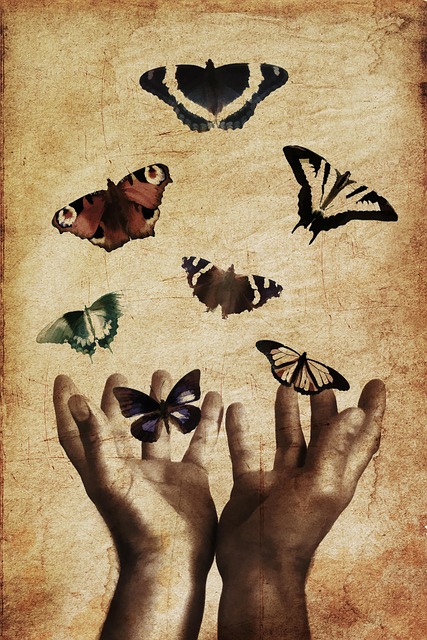
Notably, Lammas also fell near the old feast of Saint Peter in chains — a reminder that true freedom is found not in endless productivity, but in offering. In releasing what we hold tightly and letting it be shared, blessed, broken.
Saints of the Day: Cenydd and Almedha
Two saints remembered around this time echo these themes in quiet, compelling ways.
Saint Cenydd, a hermit of the Welsh coast, is said to have been carried as a child into the wilderness by seabirds after being abandoned. Crippled and unassuming, he grew into a life of healing, solitude, and prayer. His sanctuary at Llangennith became a place of pilgrimage — not because he sought renown, but because his very life bore fruit.
There’s something profoundly Lammas-like in Cenydd’s story. The harvest of his life was not measured in crops or conversions, but in quiet transformation. His solitude became a sanctuary for others. His limitations bore unexpected grace.
Then there is Saint Almedha, or Eluned — a virgin martyr of Brecon, said to have chosen a life of devotion over royal marriage. The ground where she died is said to grow red-tipped grass in remembrance. Her story is one of costly choice, of laying down a worldly future to walk a different path.
In both lives, we see this deeper truth: that the most sacred harvests are often hidden. They grow in silence. In sacrifice. In a refusal to live by the measures of success the world demands.
What Will You Offer?
Lammas, at its heart, is an invitation. Not to perform, or pretend, but to pause — and to notice. What has grown in you this year? What patience have you learned? What insight? What wound have you tended with unexpected grace?
And what might it mean to lift that to the altar of the present moment and say, simply, thank you?
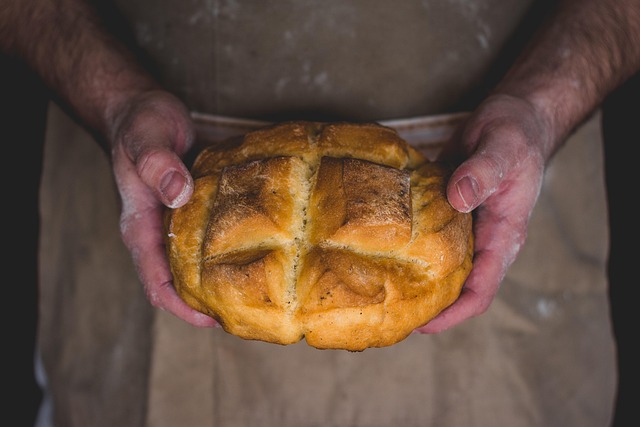
In our modern lives, it is easy to rush from one season to the next without stopping to honour what is changing. Lammas calls us to something different. A way of living that listens for God in the ordinary. That honours each stage of becoming. That trusts the One who brings all things to fullness in their time.
Even now — especially now — that invitation still stands.
A Blessing for Lammas
May you recognise the first fruits of grace within you.
May you honour the quiet harvest of your soul.
May your offerings be received with joy.
And may you remember — even when the field looks bare —
that the God of the harvest is also the Keeper of the seed.
References & Source Notes
Lammas / Loaf Mass
Lammas (from Old English hlāfmæsse, “loaf mass”) was historically celebrated on August 1st as the first-fruits festival of the wheat harvest. Anglo-Saxon Christians would bake loaves from the first grain and offer them in thanksgiving during a special church service.
→ See: Ronald Hutton, The Stations of the Sun (Oxford University Press, 1996), Chapter 8.
Lammas and the Feast of St Peter in Chains
The Roman feast of St Peter ad Vincula (St Peter in Chains), observed on August 1st, overlapped with Lammas in many medieval calendars. In some regions, both were observed, reflecting the fluidity of seasonal and saintly commemorations in the early Church.
→ See: The Oxford Dictionary of Saints, David Hugh Farmer (Oxford University Press, 2003).
Seasonal Rhythms in the Early British Church
While precise documentation is sparse, there is broad scholarly agreement that early Celtic and British Christian communities incorporated the agricultural and seasonal cycles of the land into their spiritual practice, blessing fields, crops, and natural cycles.
→ See: Esther De Waal, The Celtic Way of Prayer (Darton, Longman & Todd, 1997);
→ See also: Alexander Carmichael, Carmina Gadelica (1899–1940), vols. 1–6.
Saint Cenydd
Saint Cenydd (also Cenydd or Kenneth) was a 6th-century hermit of Llangennith, Wales. Tradition holds he was disabled from birth, raised by seabirds, and later became a healer and solitary. His life is recorded in the Buchedd Cenydd and referenced in hagiographic collections.
→ See: Sabine Baring-Gould & John Fisher, The Lives of the British Saints (1907), Vol. 1;
→ Elizabeth Rees, Celtic Saints of Western Britain (Sacristy Press, 2013).
Saint Almedha (Alud / Elyned)
Saint Almedha is a virgin martyr of Welsh tradition, associated with the Brecon area. According to legend, she refused an arranged marriage and was slain for her faith. The field where she was martyred is said to grow red-tipped grass as a sign of her sacrifice.
→ See: Baring-Gould & Fisher, The Lives of the British Saints (1907), Vol. 1;
→ Local folklore recorded in church records of Brecon.
Celtic Theology and the Presence of God in Creation
A foundational tenet of Celtic Christian spirituality is that God is encountered in and through the natural world — that creation is sacramental and the divine speaks through the rhythms of the earth.
→ See: J. Philip Newell, Listening for the Heartbeat of God (Canterbury Press, 1997);
→ John O’Donohue, Anam Ċara: A Book of Celtic Wisdom (Bantam, 1998).
 Ancient Whispers
Leave a comment