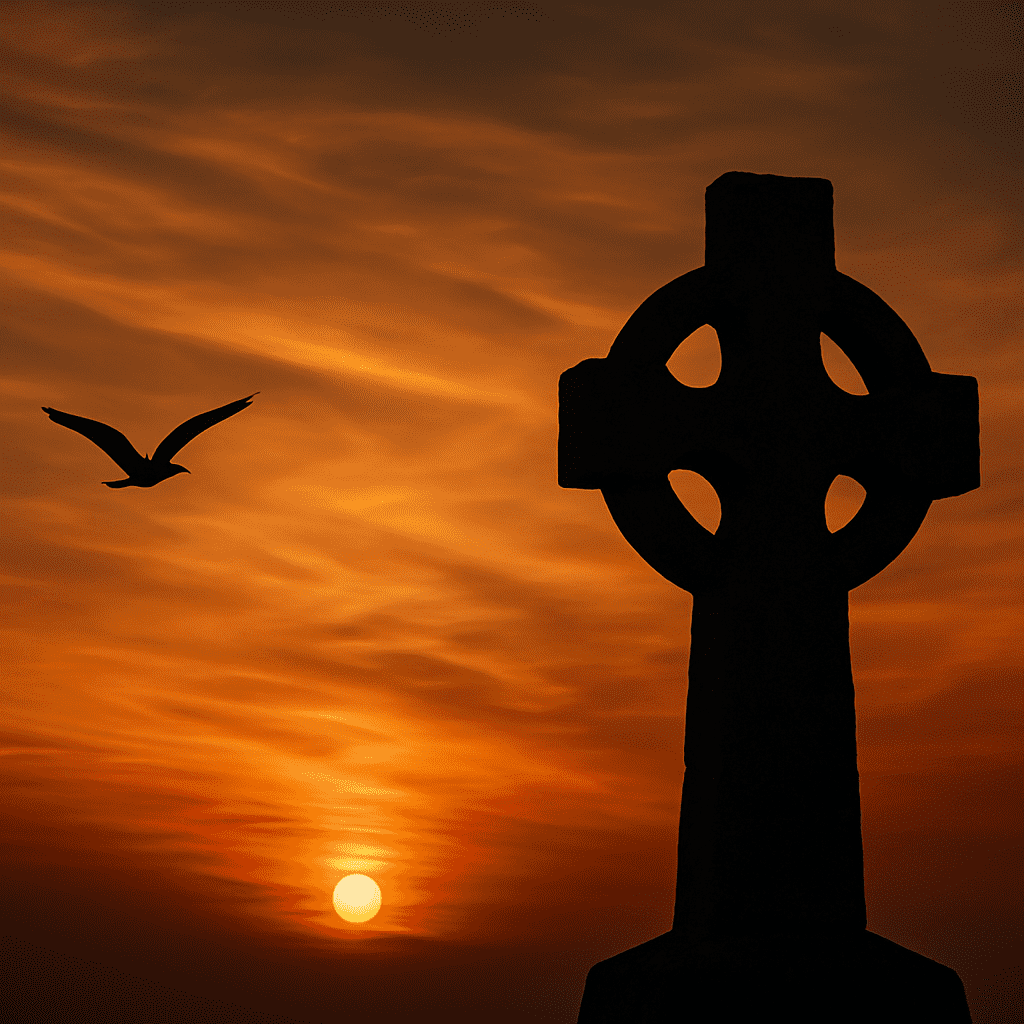
What if Revelation is not about wrath at all?
What if it is not divine fury unleashed, but a sacred unveiling of what happens when harmony is broken — and what emerges when we dare to see through heaven’s eyes?
The word apocalypse means to uncover, to reveal. It is the drawing back of a veil — not to show destruction, but to show truth. The deeper truth of a world out of rhythm. A world built on disconnection. And the invitation, again and again, to return.
This is not a courtroom. This is not the end. This is the moment when illusion is stripped bare and reality — divine, tender, eternal — stands revealed.
The Celtic Heart Understands
In the Celtic vision, God is not seated above with thunder in one hand and judgment in the other. God is the Breath within all breaths, the Flame within all flames, the Silence between the notes. God is not detached from creation, but woven through it — the heartbeat beneath the soil, the hush at dusk, the presence in mist.
When the world fractures, the Celtic soul does not say, “God allowed it.” It says, “The song of creation has fallen out of tune.” Injustice is not ordained. It is disharmony. A rupture in the sacred soundscape of relationship.
So when Revelation describes upheaval — stars falling, trumpets sounding, bowls poured out — it is not describing God’s punishment, but the echo of what happens when love is forsaken.
“They sow the wind and reap the whirlwind.” — Hosea 8:7
The visions are not God’s violence, but the unmasking of ours. They are consequence, not cruelty. And even there, God is not watching coldly from afar. God is present. God grieves. God sings.
The visions are not God’s violence, but the unmasking of ours. They are consequence, not cruelty. And even there, God is not watching coldly from afar. God is present. God grieves. God sings.

Harmony Beneath the Chaos
To the mystic, to the poet-saint, there is always a deeper current beneath the surface. A stillness under the storm.
“Be still, and know that I am God.” — Psalm 46:10
Revelation does not begin with judgment. It begins with love letters. It begins with candles lit in the dark. And at its heart is not a war-horse but a Lamb. Not a throne of dominance, but a centre of surrender.
“The Lamb who was slain is worthy…” — Revelation 5:12
Think of Brigid tending the fire. Think of the Spirit brooding over chaos in Genesis. Think of Christ walking the sea’s skin as the winds howl.
This is the same God.
Not rage, but refining fire.
Not vengeance, but wakefulness.
Not fear, but pause — the silence in heaven is the silence before transformation.
“For the creation waits with eager longing for the children of God to be revealed.” — Romans 8:19
A God Who Feels
The God of the Celtic saints is not unmoved.
He is the Christ who weeps.
The Spirit who groans.
The One who does not stand outside suffering but inhabits it.
“Surely he has borne our griefs and carried our sorrows.” — Isaiah 53:4
When the world groans, God groans with it.
When love is rejected, God feels the ache.
And when we ask, where is God in the unravelling?
The vision answers:
The Lamb is still in the centre.
The elders still fall down in surrender.
The sea is still clear as crystal.
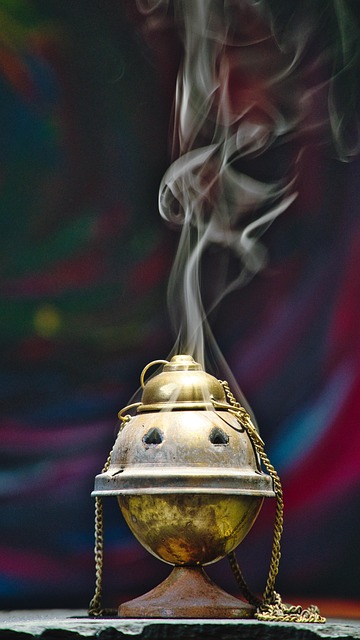
The prayers still rise like incense.
This is not terror theology.
This is a mystical unveiling.
A deeper harmony waits to be heard.
A song beneath the noise.
A tenderness beyond the symbols.
What Can We Do?
It’s easy to feel helpless in the face of global unrest, environmental grief, and social fracture. The scale of it is overwhelming. But the Celtic way teaches us that transformation doesn’t begin on the world stage — it begins in the soul. It begins wherever we are.
“The kingdom of God is within you.” — Luke 17:21
To bring balance, we return to rhythm. To restore harmony, we begin with presence.
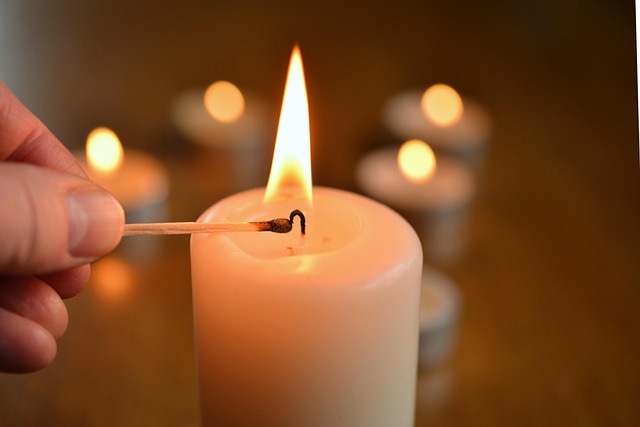
You do not need to fix the world. You are invited to tend the space within and around you. Light a candle. Breathe with intention. Walk barefoot on the earth. Speak blessing into your day. Forgive where you are able. Choose simplicity. Listen before speaking. Let your heart soften before it hardens in reaction.
These things are not small. They are real acts of spiritual resistance.
And from these quiet, rooted practices, the harmony begins to return — not only to your soul, but to the spaces you touch. Like ripples in water. Like songs picked up by others who are also listening.
Revelation doesn’t ask us to flee the world. It asks us to see differently. To return. To become a tuning fork in the hand of God.
So stay there. Not in fear. But in stillness.
Listen for the Lamb. Watch for the light. Feel the heartbeat of the One who is not above the pain — but within it.
You are not lost. The centre still holds. And Love, still singing, is calling you home.
Discover the
Caim Chapbooks series
and start your journey with Caim.

 Ancient Whispers
Leave a comment