There are days in the Church calendar that feel like history lessons—important, yes, but somehow distanced from our lived experience.
Pentecost isn’t one of them.
Pentecost is not simply a story of what happened then. It’s a living moment that still finds us. It moves like wind across the soul’s landscape, kindling flames in unexpected places. It is a day not of remembering alone, but of awakening.
The Wild Spirit of God
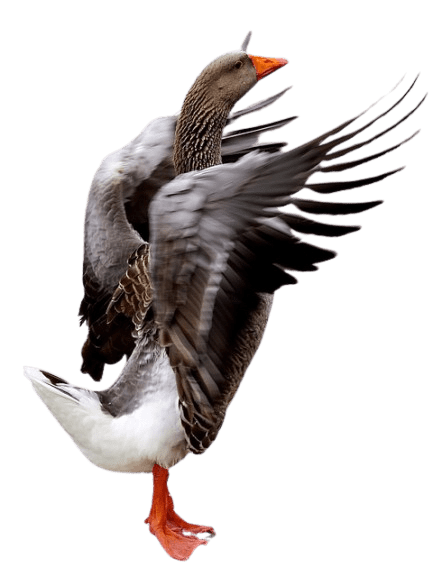
In the Celtic tradition, the Holy Spirit is often symbolised not as a gentle dove, but as a Wild Goose. Not tame, not controlled. She is sudden flight, startling honk, fierce presence. She lands where she pleases and calls when you least expect it. Pentecost is her feast.
It is the celebration of divine disruption.
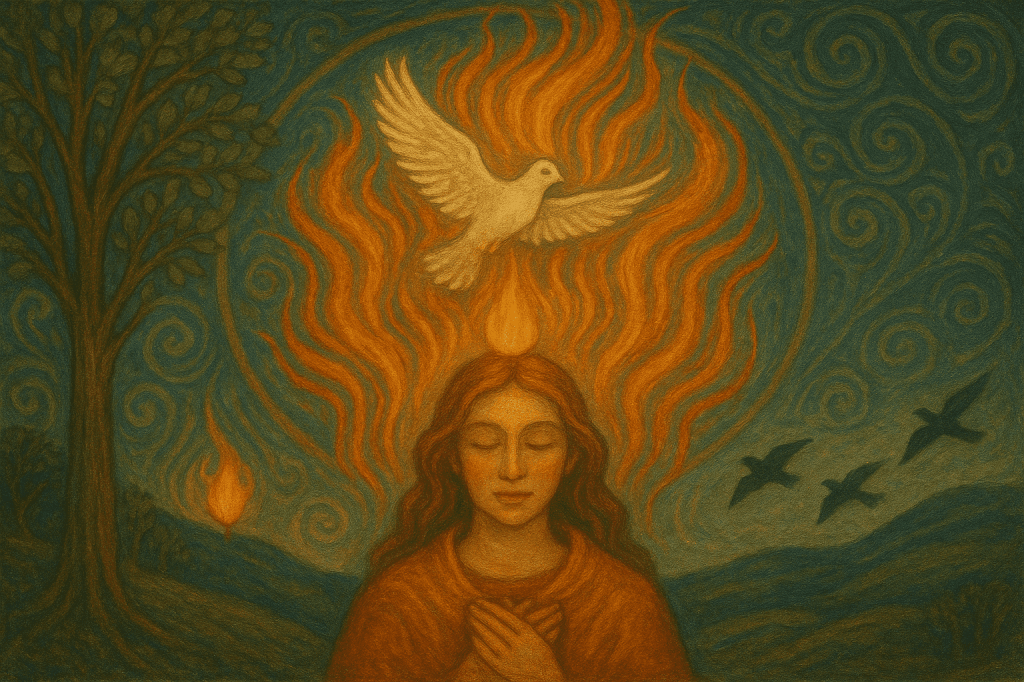
The disciples were gathered in one place—waiting, uncertain, heavy with the absence of Jesus. And then, as if the world inhaled the breath of God and exhaled fire, everything changed. The room filled with wind. Tongues of flame danced upon each head. And suddenly, the boundaries between them and the world dissolved.
What is striking is that the Spirit didn’t erase difference—She spoke through it. Each person heard the truth of God in their own language. Not some celestial tongue reserved for the elite. Their own native language. The sound of their stories. Their fears. Their hopes. The language of home.
The Undoing of Babel
In many ways, Pentecost is the healing of the Tower of Babel. Where once humanity’s pride and ambition led to fragmentation and confusion, here Spirit brings unity not by flattening difference, but by honouring it. A great Celtic truth shines through: the Spirit does not erase the particular to reach the universal—She moves through the particular to reveal the universal.
It is as if Pentecost whispers: You do not need to become someone else to encounter the Divine. You need only be open in your own skin, in your own language, in your own waiting.
Divine Fire: Not Destruction, But Illumination
Fire is a potent symbol. It can destroy, yes. But it also warms. It lights. It refines. At Pentecost, it is fire that rests upon the heads of the disciples. Not a burning bush at a distance, not a pillar in the sky—this time, the flame is personal.
The Spirit of God chooses people as her temple. This is no longer about sacred buildings. It’s about sacred becoming.
You.
Me.

The places within us we had assumed too broken, too fearful, too flawed—these are the very places where the fire chooses to rest. The Spirit doesn’t wait for us to be ready in the ways we imagine readiness: perfect, confident, full of faith. She comes in the waiting. She comes to the honest. She comes to those who know they cannot manufacture meaning on their own.
The Celtic Edge of Pentecost
To the early Celtic Christians, the Holy Spirit was everywhere: in the ocean winds, in the laughter of a child, in the silence of a glen. They didn’t speak of the Spirit as an abstract concept, but as the very Breath that animates all life.
Pentecost, then, isn’t just about a single historic moment—it’s about recognising that this sacred Breath continues to stir.
Right now.
In the hidden corners of your day. In the birdsong you nearly missed. In the deep sigh when you think no one’s listening. In the ache that reminds you you’re still alive.
The Spirit comes not only in tongues of fire, but in the quiet recognition that something ancient and holy is awakening inside you.
Living Pentecost Today
So how do we celebrate Pentecost in a way that moves beyond the pageant and touches the soul?
We stop.
We breathe.
We listen for the sound beneath the noise.
And we ask:
- Where am I being invited to wait?
- What part of me is ready to catch fire—not with frenzy, but with quiet purpose?
- What language is the Spirit speaking to me in today? Not the language of doctrine or duty—but the language of love, art, grief, music, silence, longing?
The miracle of Pentecost is not that people spoke new languages. It’s that others heard truth in their own. The miracle is not performance—it is presence. Connection. Communion.
And maybe, just maybe, Pentecost invites us not to go out and speak to the world in tongues it doesn’t understand, but to listen to the Spirit already speaking through it.
A Practice for the Week
Take ten minutes each day this week to sit in stillness. Breathe gently. Then ask:
Holy Spirit, speak to me in the language I understand. Show me what needs to be set alight in me. Show me where to move. Show me how to wait.
Then trust what stirs.
A word. A feeling. A song. A silence.
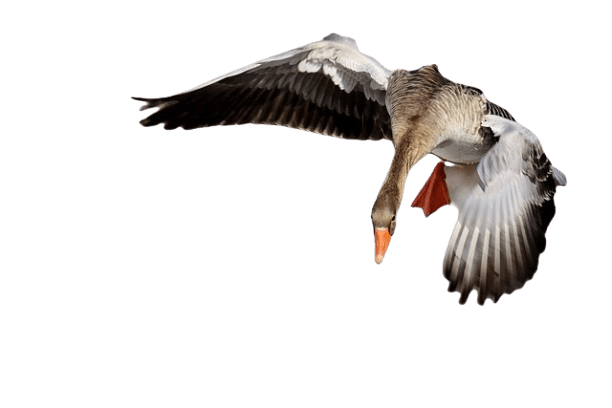
The Wild Goose lands when She will. Be ready.
 Ancient Whispers
Leave a comment