There’s a difference between a Church that moves by structure and one that moves by Spirit. The first makes sense on paper—plans, models, systems of growth. The second rarely fits into a spreadsheet. It breaks open like wild fire in a dry valley. It moves unpredictably, almost impossibly, and leaves behind joy, healing, and the unmistakable aroma of God’s presence.
We don’t talk enough about the simplicity and power of the early pioneers. Philip didn’t wait five years for a leadership program to affirm him. He wasn’t trained in strategic rollout. He wasn’t voted in by committee. He showed up where he was sent, ignited by Spirit, and the Kingdom broke open.
What made Philip effective? And why does that question still ache with urgency today?

As modern believers—especially those called to live on the margins, in small towns, in liminal spaces—we need to revisit what made the early Church alive. Not in a romanticised, sepia-toned way, but in a deeply practical, mystical way. The question isn’t whether we can reproduce the early Church. We can’t. But we can live from the same Presence. And that changes everything.
1. Yielding, Not Planning: The Power of Availability
Philip didn’t carry a roadmap. He carried presence. There’s something powerful in that.
The early apostles weren’t successful because they had superior methods. They were effective because they were completely yielded to the Spirit. They listened. They moved. They didn’t cling to outcomes or timelines. They showed up where God sent them—and they trusted that was enough.
In today’s Church culture, there’s often a subtle obsession with control. We build structures before we discern movement. We plan communities before we sense what the Spirit is saying. But spiritual authority doesn’t flow from plans. It flows from presence. From obedience. From the willingness to move without knowing what comes next.
Celtic Christianity understood this. The early Irish monks were known as peregrini pro Christo—wanderers for Christ. They set out in small boats without rudders or oars, trusting the wind of the Spirit to take them where they were needed. They didn’t build ministries. They followed Presence. They carried fire, not frameworks.
To be truly effective in the Kingdom today means becoming radically available. It means being willing to release our dependence on preparation and instead step into participation—messy, unpolished, Spirit-led participation. It means trusting that God is already at work, and we are simply stepping into the flow.
2. Power Over Performance: Living from What Has Been Given
Philip wasn’t trying to launch a personal brand. He wasn’t perfecting a five-point message series. He simply released what God had poured into him. He lived from overflow. And the result? Healing, deliverance, baptism, transformation.
It’s so easy to forget this. We live in a culture where everything is measured—metrics, likes, growth. Even in ministry, there’s a pressure to perform, to present ourselves as spiritually competent, relevant, refined. But none of that brings power. Power comes from encounter.
The early believers lived from a place of baptism—not only in water, but in Spirit. They weren’t just forgiven; they were filled. And what they carried couldn’t be contained. They knew what it meant to sit in upper rooms, to be undone by fire, to speak words they didn’t understand and see lives turn in an instant.
This wasn’t hype. It was holiness. Raw. Risky. And utterly real.
Mystically speaking, this is still available. The invitation is not to imitate Philip’s actions, but to carry the same surrender that made those actions possible. To be baptised not just in belief, but in fire. In divine love. In the uncontainable, liberating Spirit that transforms not just behaviour, but being.
When we stop performing and start releasing what’s truly within us, something shifts. We stop managing impressions and start hosting Presence. We speak not to convince, but to awaken. We pray not to impress, but to become conduits. We become, in the truest sense, vessels.
3. Expecting Movement: Living as if the Gospel Is Real
The early Church didn’t treat the Gospel as a concept. They treated it as reality. Life and death. Light and darkness. Freedom or bondage.
They expected change.
When they entered a town, they anticipated that something would shift. Not because they were powerful, but because the Spirit was with them. And that expectation made space for miracles.
We’ve grown cautious. We’ve learned to temper our hopes with policies and process. But what if we began to expect again? What if we walked into rooms—not arrogantly, but prayerfully—trusting that Christ in us is enough to shift the atmosphere?
This is not ego. It’s embodiment.
Many people today are disillusioned with institutional Christianity because it often feels like theory divorced from experience. But what if the Gospel were lived again as something alive? Not just something discussed in meetings, but something felt in the bones? What if prayer turned into power, and power turned into presence, and presence turned into liberation?
Celtic Christians spoke often of thin places—moments where the veil between heaven and earth seems to lift. But perhaps the thinnest place of all is the human soul surrendered to God. When someone walks in truth, soaked in the Spirit, listening deeply and loving freely, the Kingdom breaks in.
We don’t need more strategy. We need more surrender. More souls walking in holy expectation. More people believing that when Christ said “you will do even greater works,” He meant it.
Resisting the Resignation Culture
There’s a growing resignation in some parts of the Church that community, impact, and transformation take decades. And yes—depth takes time. Trust is built slowly. But we must be careful not to confuse patient growth with spiritual stagnation.
To say, “It takes five to ten years before you see change,” may sound wise. But sometimes, it masks a deeper doubt that anything could happen quickly, now, here.
Philip didn’t take ten years. He took a walk with the Spirit. And a city was filled with joy.

There is value in the long journey. But there is also something dangerous in expecting too little. The Gospel doesn’t always need time to work. It needs space. And when that space is open, things move.
We must hold a vision for the slow and the sudden. For the patient and the prophetic. For the rooted and the rushing. God’s Spirit moves in both ways—often at once.
What Might It Look Like Now?
What would it look like today to walk as Philip walked?
To arrive in a conversation, a café, a side street—and carry such clarity, such surrender, that something in the atmosphere tilts toward God?
To listen so deeply to the Spirit that we speak not out of habit, but from a place of fire?
To carry such peace, such power, such quiet love, that people feel seen again?
The truth is, we’ve already seen glimpses of this—in healing rooms, in whispered prayers, in encounters that shift lives in a moment. It’s not new. But we’ve forgotten how to expect it.

And perhaps, the invitation now is not to do more—but to yield more.
To step back from the noise and reconnect with the Source. To live with less performance and more Presence. To stop clinging to timelines and start trusting in sudden grace.
Becoming Fire Again
This is not about revival as event. It’s about rewilding the soul.
We were never meant to tame the Spirit. We were meant to be lit by it. The Church is most alive when it stops managing the Kingdom and starts manifesting it.
When we remember Philip, we remember what’s possible when a person moves with God.
That kind of life doesn’t wait for permission. It doesn’t rely on credentials. It’s not reckless—but it is surrendered. And it is deeply, unmistakably effective.
Not because it’s big. But because it’s real.
And real, yielded faith still moves mountains.
Closing Reflection
Maybe what the Church needs now is less choreography and more encounter. Less vision casting, more vision catching. Less explanation, more embodiment.
To walk like Philip is to believe again in a Gospel that breathes, speaks, heals, and frees.
It is to be moved—not just in geography, but in essence.
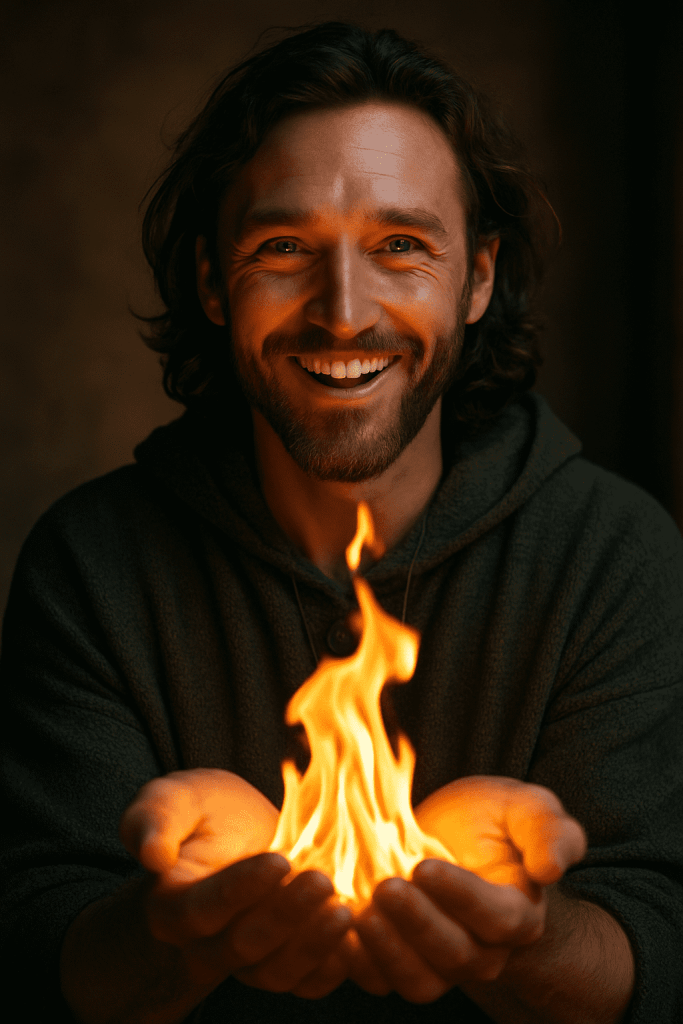
May we become a people who carry fire, not frameworks.
Who yield before we strategise.
And who trust that when God sends us, He also fills us—with everything we need for the work ahead.

 Ancient Whispers
Leave a comment