Good Friday stands as one of the most difficult days in the Christian story. It is not a day for easy answers or triumphant celebrations. Instead, it invites us into the raw, uncomfortable reality that love does not always come with rescue. Jesus is betrayed by a friend, abandoned by his followers, handed over to mockery and violence. And despite having the power to save himself, he chooses not to escape. He remains.
In our culture, we expect heroes to be saved at the last moment. We hope for a sudden breakthrough, a reversal that makes the pain worthwhile. But on Good Friday, the rescue does not come. There are no angels descending from the clouds, no dramatic displays of power to overturn injustice. There is only the long, slow suffering of the cross, and the silence of a God who stays present even when it seems the whole world has turned away.

This is not the story we expect, and it is certainly not the one we prefer. Yet it is profoundly honest. It meets us where life often meets us: in the places where prayers seem unanswered, where hope feels thin, where suffering comes and there is no easy way around it. Good Friday refuses to rush past the pain. It asks us to stand with it. To sit with the questions. To honour the experience of brokenness without trying to immediately fix or explain it away.
The Celtic Christian tradition has always had space for this kind of mystery. It teaches that God is not found only in moments of clarity and light, but also in the shadows, the uncertainties, the long unknowing. In this tradition, there is a recognition that the sacred moves through the dark seasons of life as surely as through the bright ones. Good Friday fits naturally within this vision. It is the day when God does not fix the brokenness from above but steps into it with us.
There is a quiet dignity in the way Jesus carries the cross. There is no sense of defeat, even though from the outside it must have appeared that way. There is simply a deep, unwavering commitment to love without conditions. He does not resist the suffering to save himself. He does not bargain his way out of the pain. Instead, he chooses to stay—to bear the weight of the world’s violence, loneliness, and betrayal—and to transform it not by avoiding it, but by moving through it.
Each of us carries our own small crosses. They may not be as visible or dramatic, but they are real: the griefs we cannot outrun, the losses we cannot fix, the dreams that seem to die without resurrection. Often we resist them, hoping that somehow they will disappear if we try hard enough. But Good Friday invites us to lay down the struggle to escape and instead to allow ourselves to stand at the foot of the cross, in all our vulnerability and all our incompleteness.
Today, we are not asked to explain why suffering exists. We are not asked to make it meaningful or to pretend that it does not hurt. We are simply asked to stay present—to sit in the ache without rushing to hope, to trust that even when everything looks lost, love has not abandoned us.
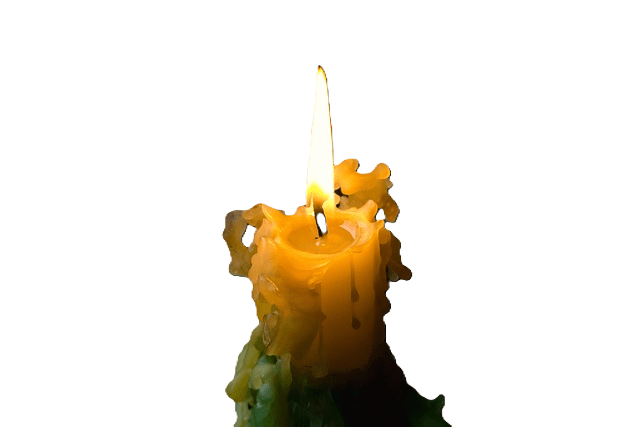
A simple practice for this day might be to light a candle and sit quietly for a few minutes. No prayers that strive for answers. No need for profound thoughts. Just stillness. Just presence. Just the willingness to be exactly where you are, trusting that Christ is there too.
Good Friday reminds us that salvation does not come through the avoidance of pain, but through a love that refuses to leave us, even in death. It reminds us that God’s answer to human suffering was not escape but solidarity. And it invites us, if only for a little while, to set down our striving and simply be.
The resurrection will come. But today, we stand in the place where love stayed, without rescue, and let that truth work its quiet transformation in us.
 Ancient Whispers
Leave a comment