Maundy Thursday marks a turning point in Holy Week. By now, the triumphal entry has faded, and the tension that will culminate in the crucifixion is beginning to rise. But here, in this moment, the drama pauses. Jesus gathers with his closest friends, not to preach or heal, but to share a meal. And in doing so, he reveals the essence of what his whole life has been pointing toward: a love that is humble, embodied, and quietly transformative.
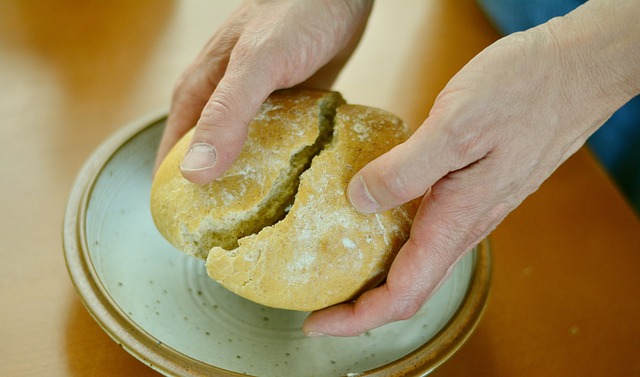
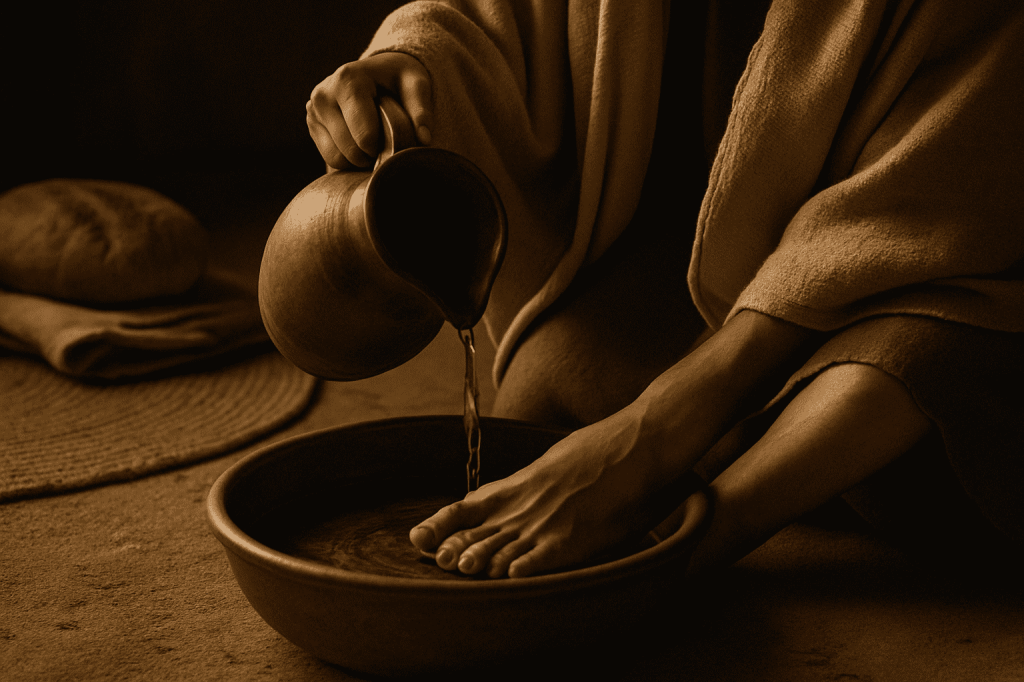
In the hours before his arrest, Jesus chooses not to perform a miracle or deliver a final sermon. He chooses instead to take bread and wine, bless them, and offer them as symbols of his very self. And then, even more startlingly, he gets up from the table, kneels down, and begins to wash his disciples’ feet. It’s an act of complete reversal—where the one with authority becomes the servant. Where leadership looks like kneeling. Where love becomes action.

This is what makes Maundy Thursday so challenging and so beautiful. It reminds us that the spiritual life is not about striving to be seen as good or holy—it’s about choosing to serve, even when no one is watching. It’s about presence. Not just being in the room, but being truly with others. Sharing in their dust, their tiredness, their humanity.
The commandment Jesus gives on this night—“Love one another as I have loved you”—isn’t just a moral instruction. It’s a way of being. It reorients our sense of power, worth, and holiness. Love is no longer about feelings or ideals. It’s about who we’re willing to serve, and how we show up in small, concrete ways.
In the Celtic Christian tradition, these small acts of service are not seen as lesser expressions of faith, but as the very heart of it. Celtic spirituality speaks often of love made manifest through rhythm, relationship, and rootedness. The shared meal, the blessing of food, the walking together through everyday life—these were all seen as places where Christ was encountered. Maundy Thursday echoes that deeply. There is no need for spectacle here. Just bread, wine, water, and presence.
And we must not forget that Judas is still at the table. Jesus washes his feet too. He offers him the same bread. The love Jesus shows isn’t reserved for the worthy. It’s given freely, even to the one who will walk away. That, perhaps more than anything, is what makes his love so different from ours. It’s not dependent on outcome. It’s not withdrawn out of self-protection. It simply keeps giving, even in the face of betrayal.

For us, the invitation of this day is simple but profound. It is to love quietly. To serve without needing credit. To be fully present with those we’re given to walk alongside. And perhaps more challenging, to accept that same kind of love when it’s offered to us.
We often resist being cared for, especially in such intimate ways. Like Peter, we don’t always know how to receive someone kneeling for us. But if we are to live the rhythm Jesus models, we must learn not only how to give love, but how to let it be given.
So today, Maundy Thursday calls us to pause and reflect. How do we express love—not just in theory, but in practice? Where might we serve more gently? How might we let ourselves be served, not out of pride or reluctance, but from a place of shared humanity?
You don’t need to do something dramatic to honour this day. A simple shared meal, an act of kindness, a few quiet minutes spent with someone who needs your presence—these are enough. These are holy.

The spiritual life was never meant to be lived in grand gestures. Jesus shows us that it is lived in bread passed across a table, in water poured over tired feet, in choosing to stay present when it would be easier to withdraw.
This is the love that changes the world—not by force, but by presence.

 Ancient Whispers
Leave a comment