There’s something no one tells you when you begin a spiritual journey:
You don’t become immune to struggle—you become more aware of it.
The moment you decide to walk with intention, to orient your life toward God, to live more awake, something stirs. The shadows don’t go away. They move in closer. Not to destroy you—but to ask, “Do you really mean this?”
We often think of temptation as a singular, dramatic event. But it rarely looks like that. Temptation is often subtle, patient, persistent. It begins as a whisper. It offers relief, comfort, escape. It doesn’t always shout—it waits.
And it always finds us, because it already lives within us.
Why Temptation Is Not a Sign of Failure
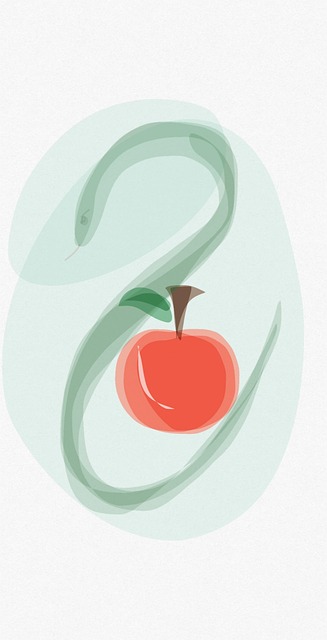
In many spiritual traditions, temptation is viewed as a kind of failure or weakness. Something shameful. Something to be hidden. But the older wisdom—the wisdom we find in the desert fathers, the Celtic saints, and the deeper stream of Christian mysticism—tells a different story.
Temptation isn’t something that happens to you. It’s something that reveals what’s already there. It shows you your attachments, your compulsions, your woundedness, your ego, your pride. It uncovers the places where your life is still misaligned with your soul.
It’s diagnostic, not destructive. Unless you refuse to listen.
In the old monastic path, temptation wasn’t a spiritual detour—it was the very arena in which the soul was tested, shaped, and made strong.
The Celtic Way: Struggle as Sacred
The Celtic monks who wandered the coasts and islands of Britain and Ireland didn’t do so because they were running from temptation. They did so because they knew that even in the most remote hermitage, temptation would follow. Not just in the form of distractions, but in thoughts, in memories, in desires, in the habits of the flesh.
And so they made peace with the battle.
They learned that temptation was not the enemy. Pride was.
Pretending it wasn’t happening was.
Believing they were beyond it was.

So they chose the path of humility, of honesty, of continual prayer.
They didn’t expect to win every battle. They expected to be tested.
But they also expected grace to meet them in it.
Temptation Is Not Just About Morality
We’ve often reduced temptation to a set of moral rules: don’t lie, don’t cheat, don’t lust, don’t take more than your share. But at a deeper level, temptation is anything that pulls us away from the present moment, from our true self, and from God.
- It’s the temptation to numb when things get uncomfortable.
- The temptation to compare when we feel insecure.
- The temptation to control when life feels chaotic.
- The temptation to isolate when we feel ashamed.
- The temptation to grasp at power, attention, or success when we feel unseen.

Temptation isn’t always dramatic. Sometimes it’s as simple as reaching for our phone for the hundredth time today instead of pausing to breathe. Sometimes it’s an unspoken jealousy. A silent resentment. A distraction that becomes a way of life.
And often, we don’t even realise we’ve given in until we feel the weight of disconnection settle in.
Why Fighting Isn’t Always the Answer
Modern self-help culture tells us to resist temptation by willpower. Fight harder. Be stronger. Think positively. But spiritual wisdom suggests something more enduring: resistance through surrender.
We do not overcome temptation by sheer force of will. We overcome it by humility, honesty, and practice.

We learn to resist not by pushing back harder, but by softening into the presence of God.
By noticing the moment temptation arises.
By admitting what’s happening without shame.
By choosing, again and again, to remain aligned with what’s real.
We fail, yes. But each time we return, something shifts. The grip loosens. The ego shrinks. The soul grows.
The Anatomy of a Temptation
Most temptations follow the same path:
- A subtle suggestion – a thought, a feeling, a scenario that floats into your awareness.
- A growing desire or fear – you start to imagine what giving in would feel like.
- Emotional justification – you begin to rationalize. “I deserve this.” “What’s the harm?” “It’s just once.”
- A decision – conscious or unconscious, you follow the impulse.
- The aftermath – sometimes guilt, sometimes emptiness, sometimes numbness.
The Celtic way was to cut this off early. Not with shame, but with awareness. They knew that if you open the door even a little, the whole storm might enter. So they trained the heart to be watchful, to meet the temptation at the gate.
That watchfulness is not paranoia—it’s presence.
Not All Battles Are Equal
Some temptations fade with time. Others revisit you like old ghosts.

Some arise at the beginning of your spiritual path, testing your resolve.
Others arrive later, more subtle and refined, testing your integrity.
And some—no matter how far you’ve come—linger quietly in the background, waiting for a moment of weakness.
There’s no shame in being tempted.
There’s only danger in pretending you’re not.
Lessons from the Long Struggle
Here are some soul-wisdoms drawn from the heart of this struggle—lessons the saints lived and that we’re invited to rediscover:
- Temptation is not a sin. Entertaining it without resistance might be. But the initial stirring is not failure—it’s an invitation to awareness.
- Some battles last a lifetime. Not because you’re failing, but because the shaping of your soul takes time. And some fires burn longer to forge deeper steel.
- Avoid pride in your victories. If you resist one temptation today, be grateful—but be humble. Tomorrow may bring a different test.
- Don’t judge others in their battle. You don’t know what war they’re fighting. Offer compassion, not condemnation.
- Temptation reveals what you trust. Do you rely on your own strength? Or do you let grace carry you through?
Practices for When You’re in the Thick of It
- Pause and Name It
The moment you feel tempted, pause. Name what’s happening. “I’m being pulled toward comfort.” “This is fear talking.” Naming is the first disarming. - Shift Gently
Don’t shout it down—redirect. Breathe. Walk. Pray. Ask God to come into it with you. Invite grace into the very place that’s hurting. - Return to Stillness
The heart becomes more vulnerable to temptation when it’s tired, distracted, or emotionally overloaded. Build regular stillness into your day. Let your nervous system come home. - Talk to Someone You Trust
Temptation thrives in silence and shame. Speak it aloud to a trusted friend, spiritual director, or elder. Light weakens its grip. - Know Your Patterns
Are there times of day, emotional states, or settings where temptation arises most? Prepare for them. Don’t be surprised by your humanity. - Anchor Your Identity
You are not your impulses. You are not your worst thought. You are beloved. You are already home. Temptation doesn’t change that.
Temptation as a Path of Transformation
What if we stopped seeing temptation as a shameful enemy, and started seeing it as a sacred mirror?
A mirror that shows us where we still grasp, still ache, still need healing.
It is not in the absence of struggle that we grow—it is in how we respond to it.
And some of our deepest spiritual growth happens not when we are floating on a cloud of peace, but when we are knee-deep in a battle we didn’t choose.

Each time we return, each time we choose the deeper path, the quieter voice, the stillness instead of the shortcut—we become more real. More grounded. More alive in God.
A Final Word for the Weary
If you are tired of struggling—know this:
You are not alone.
You are not broken.
You are being forged.
You are not defined by your temptation.
You are shaped by your return.
And you never return alone.
Feeling lost, stuck or disillusioned on your path?
Take a look at
Walking Together

 Ancient Whispers
Leave a comment