Rethinking the Origins of the Green Man
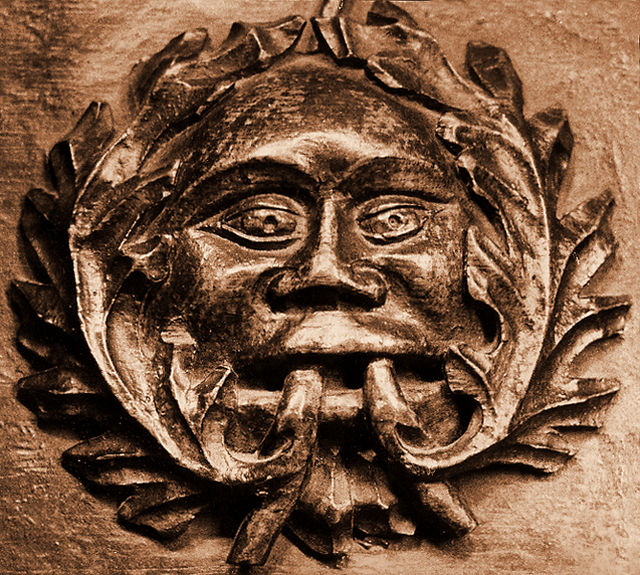
Step inside a medieval church. The air is thick with incense, the echo of chant lingers in the stone, and light pours through stained glass in shades of ruby and gold. Look closely, and hidden among the saints and angels, you may find him. A face surrounded by leaves. Eyes half-lidded or wide with wonder. Oak leaves spilling from mouth or beard. A spirit of the wild, carved into holy stone.
This is the Green Man. He peers from the carvings of churches across Europe, particularly in Britain, France, and Germany. His image feels ancient and pagan, an interloper in the sacred halls of Christian worship.
And yet… what if he is not a remnant of some suppressed old religion? What if he was not smuggled in by rebellious stonemasons or tolerated out of a half-hearted attempt at syncretism? What if, in fact, the Green Man is not a guest in the Church at all — but a child of it?
Let us explore.
📃 Where the Green Man First Appears
The Green Man, as a clearly identifiable motif — a human face surrounded by foliage, sometimes with vegetation growing from his features — first appears in the carved stonework of 11th- and 12th-century Christian churches. We see him in:
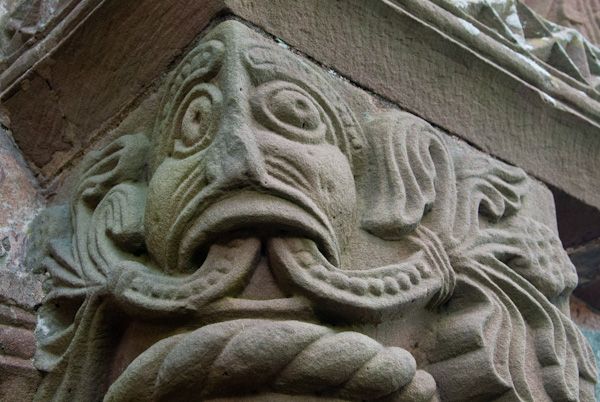
- The Romanesque carvings of France and Britain
- Roof bosses in English cathedrals
- Misericords and capitals in Gothic structures
One of the most famous early examples can be found at St. Mary and St. David’s Church in Kilpeck, Herefordshire (c. 1140), where a vividly carved foliate head peers from the stone with quiet vitality. Similar figures can be found at Poitiers in France, at Southwell Minster, and scattered throughout the sacred architecture of medieval Europe.
This is key: there are no confirmed examples of the Green Man image from pre-Christian Europe. While ancient cultures abounded with nature spirits, tree gods, and symbols of fertility, there is no visual record of a Green Man exactly as we now recognize him.
So if he did not predate the Church, we must ask: where did he come from?
🌱 A Product of Christian Imagination
By the 11th century, Europe was not just nominally Christian. It was structurally and culturally Christian. Paganism, where it survived at all, did so at the margins, in folk traditions with little bearing on ecclesiastical art.
So the idea that the Church was incorporating the Green Man to appease local pagan beliefs (as part of some lingering syncretism) does not hold up under scrutiny. It’s a romantic notion, but historically implausible.
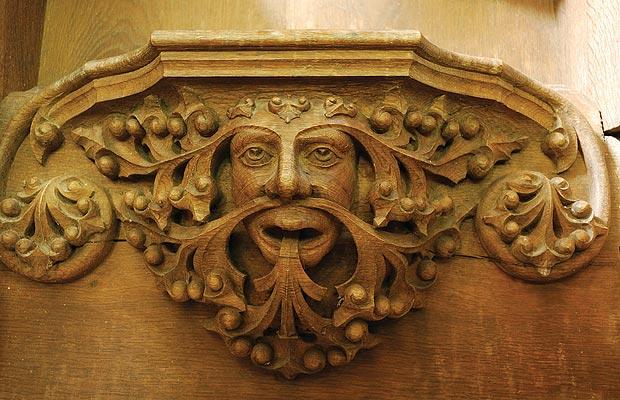
Instead, the Green Man may be far more plausibly understood as a Christian creation. Not a doctrinal invention, but a symbolic expression emerging from the Church’s deeply spiritual engagement with the natural world.
The medieval worldview was one in which all of creation was seen as imbued with meaning. Nature was not separate from spirit — it revealed spirit. This was a world where the natural and supernatural were not opposed, but intertwined.
In this context, the Green Man could represent:
- Creation itself — the world as alive with divine presence
- The Resurrection — life springing forth from apparent death
- Humanity’s link to the Earth — made from dust, returning to dust, yet destined for renewal
These are not pagan ideas. These are Christian truths, expressed in visual metaphor.
🖊️ The Stone Sermon
Churches in the Middle Ages were sermons in stone. Most of the congregation was illiterate, and so theology was conveyed through symbols, images, and architecture.
Every image had meaning. Every carving was part of a larger teaching tool.
The Green Man may have been used as a visual echo of biblical and theological ideas:
- “I am the vine, and you are the branches”
- “Unless a seed falls into the ground and dies, it remains alone; but if it dies, it produces much grain”
- The Tree of Life in Genesis and Revelation
The image of a human face emerging from leaves can thus be seen as a symbol of spiritual rebirth, of divine immanence in the natural world, and of the mystery of transformation.
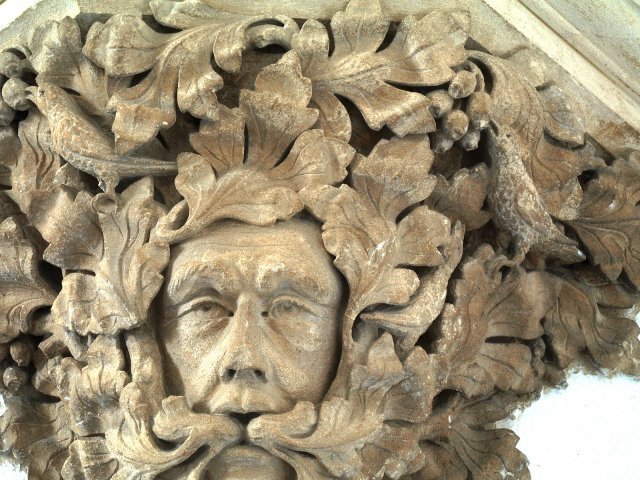
It may also have served as a gentle theological provocation — a reminder that God’s wildness cannot be fully tamed, and that even in the most sanctified places, mystery thrives.
🕵️♂️ A Brief Detour: The Batman Analogy
To make sense of how the Green Man could emerge so vividly within a Christian context, consider a modern parallel: Batman.
Batman did not exist before 1939. Yet his character was shaped by earlier influences: Zorro, The Shadow, pulp detectives, and gothic horror tropes. But it was DC Comics that gave him name, narrative, and form.
Likewise, while the Green Man may draw loosely on older archetypes of vegetation deities and nature spirits, his image — the foliate face we know — was given form by the Church. He is not a copy of something older, but a new synthesis, made possible by the symbolic and artistic vocabulary of medieval Christianity.
The Church, in a very real way, created him.
💚 Why He Endures
So why does the Green Man still capture the imagination?
Perhaps it is because he straddles the threshold between civilisation and wilderness, doctrine and mystery, life and death. He is not wholly tamed. He reminds us of the sacredness of nature, the rhythms of renewal, and the deep wisdom of creation itself.
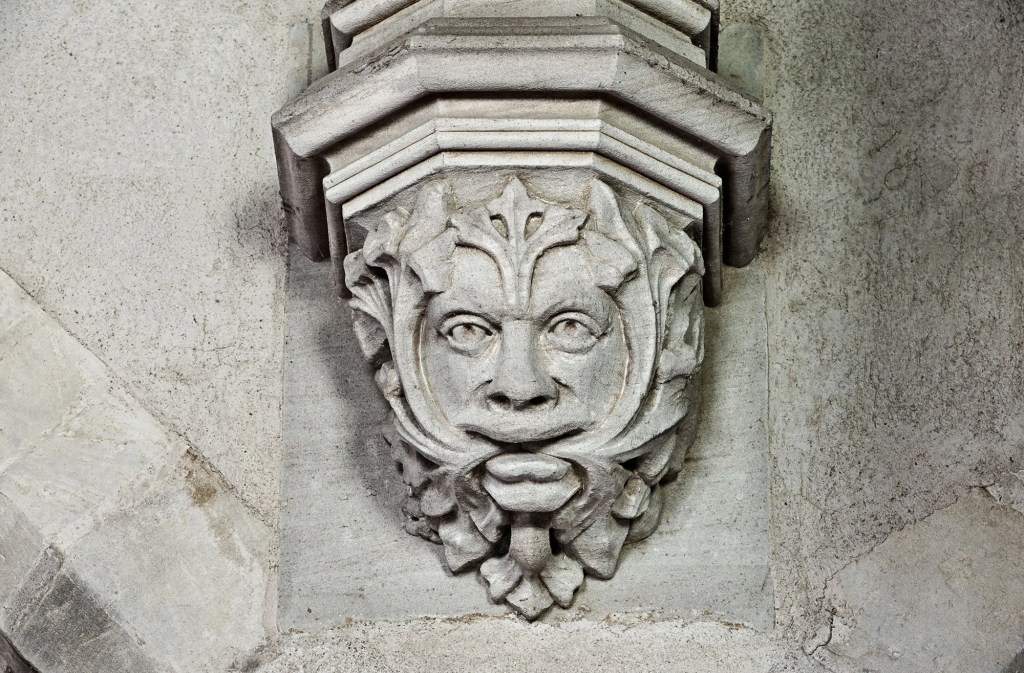
In an age where we are rediscovering our need to reconnect with the earth, he speaks again. Not just to modern pagans or eco-spiritual seekers, but to all who sense that holiness is not confined to pulpits and pages.
The Green Man is a face of mystery. A leaf-wrapped reminder that God can be found not only in cathedral glass, but in root and bark, leaf and loam.
He is, in a sense, the Church’s wild child. And like all wild children, he refuses to sit still or behave predictably. He whispers through the leaves: “There is more here than you have been told.”
🌳 The Church That Gave Birth to the Wild Man
In light of all this, we can confidently say:
- The Green Man did not predate the Church in visual form.
- His earliest known appearances are within church architecture.
- He is not a pagan symbol absorbed by Christians, but a Christian symbol that resonates with universal truths.
So let us stop thinking of him as a stowaway in Christian sacred space. Let us instead honour the imaginative and theological richness of a faith that gave rise to such a compelling figure.
The Green Man is not an outsider. He is the Church’s own creation.
He is a holy face wrapped in leaves. A parable in stone. A hymn of resurrection carved in green.
And maybe — just maybe — he is still watching from the rafters, waiting for us to see what the medieval mind never forgot:
That the divine is not only in heaven, but also in the garden,
in the grove,
in the green.
Written by Rob Chapman
Ancient Whispers | Exploring sacred symbols, Celtic spirituality, and the art of inner transformation

 Ancient Whispers
Leave a comment