There is a striking passage in Psalm 115 that speaks to something deep within the human soul:
Why do the nations say,
“Where is their God?”
Our God is in heaven;
he does whatever pleases him.
But their idols are silver and gold,
made by human hands.
They have mouths, but cannot speak,
eyes, but cannot see.
They have ears, but cannot hear,
noses, but cannot smell.
They have hands, but cannot feel,
feet, but cannot walk,
nor can they utter a sound with their throats.
Those who make them will be like them,
and so will all who trust in them.
At first glance, this passage is a warning against physical idols—those statues of silver and gold that ancient peoples worshipped. But there is something much deeper at work here. This is not just about the idols of wood and stone; it is about the idols of the mind and heart, the ones we build within ourselves.
The Idols We Create
Throughout history, humanity has had a tendency to define and contain God—to carve out an image of Him that is small, manageable, and predictable. In the ancient world, this was done with physical idols. But today, we do the same thing with ideas, doctrines, and even personal beliefs. We shape God into something that fits neatly within our expectations, something we can understand and control.
Yet, Psalm 115 presents a sobering truth: those who create idols become like them. When we shape an image of God that is lifeless, static, and unresponsive, we risk becoming the same. We begin to live in limitation, unable to move, unable to grow, unable to truly see, hear, or feel the presence of the divine.
The Celtic Vision of the Living God
In contrast to these lifeless idols, Celtic Christianity embraced a God who was not confined to human constructs. The Celts saw God in the wind and the waves, in the fire and the earth, in the unseen currents of life. God was not locked inside a temple but moving through creation, breathing life into all things.
To the Celts, faith was not about possessing God but about being in relationship with Him. They did not try to carve out a rigid doctrine that explained every mystery. Instead, they lived in the mystery, allowing God to reveal Himself through experience, through nature, through the whisper of the Spirit.
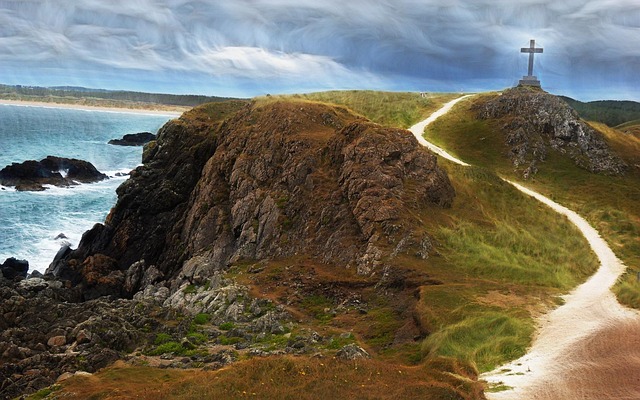
This stands in stark contrast to the idols described in Psalm 115. While idols remain motionless, bound by the limits of their makers, the God of the Celts was dynamic, moving, flowing, ever-present. Faith was not a matter of grasping, but of walking—of journeying with God through the landscapes of life, both internal and external.
The Idols We Make of Ourselves
This psalm speaks not only of the idols we create of God but of the idols we make of ourselves. How often do we construct false images of who we are—static, lifeless definitions that hold us back? We say things like:
- “I will never change.”
- “This is just the way I am.”
- “I am too broken.”
- “I am not the kind of person who can…”
- “I have always struggled with this, so I always will.”
These beliefs, like the idols of silver and gold, have mouths but do not speak truth. They have eyes but cannot see potential. They have feet but do not walk forward. And just as the psalm warns, those who make them will be like them. When we define ourselves by limitation, we become limited. When we create a static image of who we are, we stop growing.
What Happens When We Encounter the Living God?
But here is the invitation hidden within this passage: God is not an idol, and neither are you. You were never meant to be static, fixed, or unchanging. You were made to move, to grow, to be transformed. And that transformation begins the moment you stop looking to lifeless definitions and instead step into the reality of the living God.
When we encounter the true, living God—the God who moves, speaks, and acts—we begin to reflect that same vitality. Where there was stagnation, there is now flow. Where there was blindness, there is now vision. Where there was silence, there is now a voice calling us forward.

This is the mystery that Celtic Christianity embraced so fully. They did not reduce God to a set of rules or intellectual statements. They experienced Him, in the wildness of the elements, in the depth of contemplation, in the movement of the Spirit.
To encounter the living God is to wake up. It is to see the false constructs for what they are and to realize that the journey is just beginning. It is to stop asking, “Where is God?” and start recognizing, “God is already here.”
Living Beyond the Idols
Psalm 115 calls us to let go of the lifeless gods we create—whether they are ideas, fears, false identities, or rigid expectations—and to step into something infinitely greater. It invites us into relationship rather than control, into experience rather than definition.
So the question is: Where have you unknowingly shaped an idol of God?
- Have you made Him small, predictable, distant?
- Have you turned faith into a formula rather than a living connection?
- Have you unknowingly defined yourself in a way that keeps you from moving forward?
And if so—what happens when you let that go? What happens when you allow God to be bigger than your understanding? What happens when you allow yourself to be more than your past definitions?
The Celts knew that God could not be tamed, contained, or fully understood. They knew that faith was not about certainty, but about trust. They knew that to follow God was not to stand still, but to walk the path with open hands, ready for the unfolding mystery.

And that is the invitation of Psalm 115. To leave behind the idols—both of God and of self. To stop worshiping old ideas of limitation. To step into the reality of a God who breathes, who moves, who transforms.
And in doing so, to allow yourself to be transformed as well.
 Ancient Whispers
Leave a comment