We live in an age of endless knowledge. Answers are at our fingertips, available at any moment. We consume books, podcasts, documentaries, and discussions, all in pursuit of greater understanding.
But for all this knowledge, are we any wiser?
Do we live differently because of what we know? Or do we simply collect information, mistaking accumulation for transformation?
There is a difference between knowing about something and embodying it. True wisdom is not found in gathering ideas, but in living truthfully.
The Difference Between Knowing and Living
Imagine standing at the edge of a vast forest, holding a beautifully detailed map. The map tells you where the rivers flow, where the steep climbs are, and where the best resting places lie.
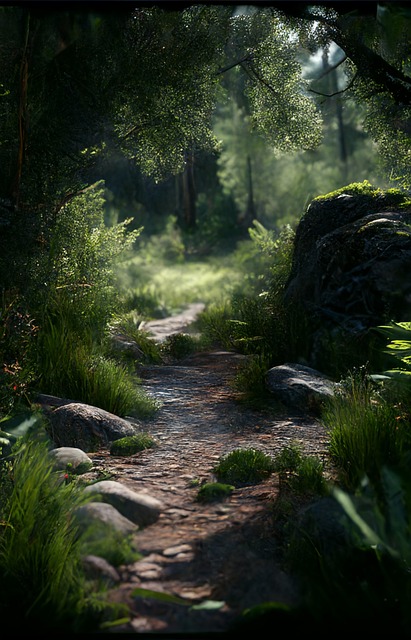
You could study that map for hours, memorizing every path and every landmark.
But unless you step into the forest and walk the path yourself, you will never truly know it.
The modern world is filled with map-readers—those who collect knowledge, analyze, debate, and discuss—but fewer are walkers of the path.
Knowledge without practice is like holding a map you never use.
- You can read every book on love, but it will never teach you how to love another human being in the hardest moments of life.
- You can learn about forgiveness, but until you forgive someone who has deeply hurt you, you won’t truly understand it.
- You can talk about faith, but it is only in walking through uncertainty and surrendering control that faith becomes real.
Celtic Christianity: The Embodied Path of Truth
The Celtic spiritual tradition does not separate knowing from living. It teaches that wisdom is something we do, not just something we learn.

The early monks and seekers of the Celtic lands understood that truth is woven into creation itself—not just in sacred texts or philosophical debates, but in the land, in stillness, in experience. They learned truth from the waves against the shore, the turning of the seasons, the way fire gives warmth but also destroys.
For them, faith was not an abstract concept—it was a lived reality, something as real as the wind on their faces or the ground beneath their feet.
This is why many of them became wanderers, setting out without destinations, trusting that the path itself would shape them. They did not just talk about trust in God—they walked into the unknown and lived it.
Their wisdom can be summed up in a simple but radical question:
Is your faith something you know, or something you live?
The Modern Search for Meaning
Today, we are drowning in more information than ever before. We consume podcasts, self-help books, spiritual teachings, and courses—yet anxiety, burnout, and disconnection are at an all-time high.
Why?
Because information does not equal transformation.
Many of us mistake learning about something for becoming it. We believe that if we just read more, we will become wiser. If we just listen to the right voices, we will be more grounded.
But truth is not found in more information—it is found in how we embody what we already know.
- We know that being present is important, yet we spend our days distracted.
- We know that rest is necessary, yet we push ourselves to exhaustion.
- We know that kindness is powerful, yet we hold onto grievances.
So the real challenge is not learning more—it is living what we already know.
Why We Resist Living the Truth
If transformation is found in walking the path, why do so many of us resist it?
Because living truthfully requires surrender.
- It requires letting go of control, rather than clinging to certainty.
- It requires risk, because real wisdom is often uncomfortable.
- It requires humility, because it means admitting we have to change.
It is easier to talk about truth than to let it shape us. It is easier to study love than to practice it when it’s hard.
But wisdom is not gained in comfort. It is gained in stepping forward when we don’t have all the answers.
How Do We Begin to Walk the Path?
If we want to shift from knowing truth to living it, we must make it part of our everyday lives.
Here are some ways to do that:
1. Slow Down and Listen
The Celts believed that truth is not just learned—it is discovered in stillness.
- Spend time in silence each day.
- Listen to the quiet wisdom that already exists inside you.
- Notice where truth is already present in your life.
2. Live Simply
Truth is often lost in distraction, busyness, and complexity.
- Ask: What is unnecessary in my life? What is keeping me from clarity?
- Let go of excess noise, whether it’s too much media, too many opinions, or too many commitments.
- Return to what is essential—things that bring life, not just stimulation.
3. Take One Step at a Time
Transformation does not happen all at once. It happens in small, daily choices.
- Instead of trying to change everything, choose one thing you know is true and live it today.
- If you know rest is important, commit to resting fully without guilt.
- If you know honesty is powerful, speak with integrity, even in small conversations.
4. Let Go of the Need to Be Right
Truth is not about proving ourselves. It is about becoming more aligned with wisdom.
- Be open to learning from unexpected places.
- Practice deep listening rather than preparing a response.
- Let go of needing to be right, and instead focus on understanding more deeply.
5. Trust That the Path Will Shape You
The early Celtic wanderers stepped into the unknown, trusting that walking would teach them what they could not learn by standing still.
- You do not need to have all the answers before you begin.
- Trust that by living the truth—even when it’s hard, even when it’s uncertain—you will be shaped in ways you could never have planned.
Truth Is Meant to Be Lived
Perhaps today is a call to stop seeking more knowledge and start living more truthfully.
Because wisdom is not found in what we know—it is found in how we walk through the world.
Truth is waiting.
Not in the next book. Not in the next conversation.
But in the choices you make today.
Feeling lost, stuck or disillusioned on your path?
Take a look at
Walking Together
 Ancient Whispers
Leave a comment