We live in a world that celebrates self-promotion. From social media to career advancement, we are constantly encouraged to stand out, build our brand, and prove our worth. Even in spirituality, there is a subtle pressure to be seen as knowledgeable, wise, or enlightened.
But what if the path to true peace, wisdom, and inner strength lies not in becoming more but in letting go?
Humility is often misunderstood. It is not about thinking less of ourselves, but rather thinking beyond ourselves. It is a freedom from the exhausting need to be admired, validated, or in control.

At its core, humility is a way of moving through the world lightly, without the weight of self-importance. It allows us to see more clearly, listen more deeply, and love more freely.
It is not weakness. It is liberation.
The Heavy Burden of Self-Importance
We are subtly trained to build our identity on what we know, what we achieve, and how others perceive us. But the more we depend on these things, the more fragile we become.
- If our confidence is built on always being right, we become defensive and closed to learning.
- If our worth is tied to success, we live in constant anxiety of failure.
- If we seek recognition, we are always at the mercy of other people’s opinions.
And yet, we hold onto these things because they give us a false sense of security. We believe that if we can just prove ourselves, then we will finally feel worthy.
But self-importance is a heavy thing to carry. It keeps us restless, striving, and never at peace.
This is why humility is the greatest act of self-liberation.
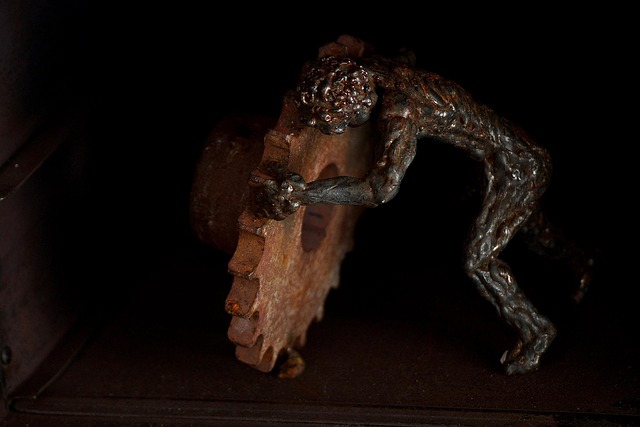
It is not self-denial—it is self-transcendence. It allows us to step off the exhausting treadmill of proving ourselves and instead find rest in something greater than our own importance.
The Wisdom of the Humble
The Celtic spiritual tradition has long understood the quiet power of humility.
In ancient Ireland and Scotland, wisdom was not found in grand debates, public recognition, or status. It was found in those who listened more than they spoke, who walked gently upon the land, and who sought to live in harmony with the unseen rhythms of life.
The Celtic monks, much like the Desert Fathers before them, embraced lives of simplicity, service, and surrender. They left behind positions of power, choosing instead to live close to the earth and close to God.
They understood something that modern culture often forgets:
- The strongest trees bend with the wind, rather than resisting it.
- The clearest waters are found in the stillest places.
- The greatest wisdom is often unspoken.
To be humble is not to be small, but to be steady—unshaken by the changing tides of public opinion or personal pride.
What Humility is Not
Humility is not thinking you are worthless. It is not erasing yourself or pretending you have nothing to offer.
It is simply knowing that your worth is not dependent on comparison, success, or approval. It is recognizing that you do not have to be the center of everything to have value.

Many people resist humility because they think it means losing themselves. But in truth, humility is where we find ourselves—not in striving, but in surrender.
The Art of Letting Go
The path of humility is a path of releasing what weighs us down.
- Let go of the need to be seen. Your value is not measured by attention or applause.
- Let go of the need to be right. Peace is found in openness, not in winning arguments.
- Let go of comparison. Another person’s success does not diminish your own.
- Let go of control. The world does not revolve around your efforts alone.
Humility is the art of holding life lightly, trusting that we are already held by something far greater than our own strength.
The Freedom of the Humble
Humility does not mean passivity. It does not mean giving up. It means choosing peace over pride, openness over defensiveness, and surrender over struggle.
- The humble do not fear being overlooked. They know their worth is not dependent on visibility.
- The humble do not need to be right. They are more interested in truth than in winning debates.
- The humble are free from comparison. They celebrate others’ success rather than resent it.
And most importantly—the humble are at peace.
Because they have nothing to prove. Nothing to defend. Nothing to chase.
They are already enough.
Living Humility in the Modern World
In a world that tells us to seek status, recognition, and influence, how do we walk the path of humility?
1. Choose Silence Over Noise
The loudest voice is not always the wisest. In a world of constant opinions, practice listening more than you speak.
2. Serve Without Seeking Credit
Do something good today—without telling anyone about it.
3. Accept That You Don’t Have to Have All the Answers
It’s okay to say, “I don’t know.” There is wisdom in admitting our limitations.
4. Let Go of Defensiveness
Not every disagreement is a battle that must be won. Sometimes, the most powerful response is graceful silence.
5. Practice Letting Others Shine
Resist the urge to compete. Celebrate someone else’s achievements without feeling diminished.
6. Be Present, Not Perfect
Humility allows us to embrace the imperfect, to be real rather than impressive.
7. Find Strength in Something Greater Than Yourself
The humble are not weak—they are deeply rooted. When you know that your worth is not dependent on external validation, you become unshakable.
The Sacred Relief of Humility
Imagine the relief of not needing to prove yourself. Imagine the freedom of letting go of comparison, self-importance, and control.

Imagine waking up each morning and knowing that your worth is not something you have to earn—it simply is.
Humility is not a loss of self—it is a return to our true self, the self that is not driven by fear, but by love.
It is a surrender, not to weakness, but to wisdom.
It is an invitation to breathe, to let go, and to trust that we are already enough.
Are You Ready to Walk This Path?

 Ancient Whispers
Leave a comment