Lent is a season of letting go, surrender, and transformation—a time when we walk with Christ through the wilderness, through suffering, through death itself, trusting in the mystery of resurrection. It is a season that echoes the core teaching of Jesus:
“Whoever loses their life for my sake will find it.” (Matthew 16:25)
These words are not just about physical death but about dying to the false self—letting go of the illusions, attachments, and fears that keep us from fully stepping into the life God is calling us to.
Lent asks us to reflect deeply:
- What do we need to release to make space for God?
- What part of our lives is still clinging to control, when Christ calls us to surrender?
- How do we move from admiring Jesus to becoming like him?
Not Just Followers—Transformed in Christ
It is easy to admire Jesus, to see him as a great teacher, a guide, or even the Savior—but he calls us to something deeper.
In John’s Gospel, Jesus makes a bold promise:

“Very truly, I tell you, whoever believes in me will do the works I have been doing, and they will do even greater things than these.” (John 14:12)
This is not an invitation to passively believe but to step into the life of Christ fully—to allow ourselves to be transformed, to become vessels through which God’s love, power, and presence flow into the world.
This is the heart of Lent.
- It is not just about giving up something—it is about dying to what is false so that we might rise into something greater.
- It is about letting go of fear, pride, and self-preservation, so that we might walk the way of Christ without hesitation.
“Make Yourselves Like the Son of the Holy Spirit”—What Does This Mean?
Though this phrase is not found in the canonical Gospels, its truth runs deep in Scripture. Paul echoes this transformation when he writes:
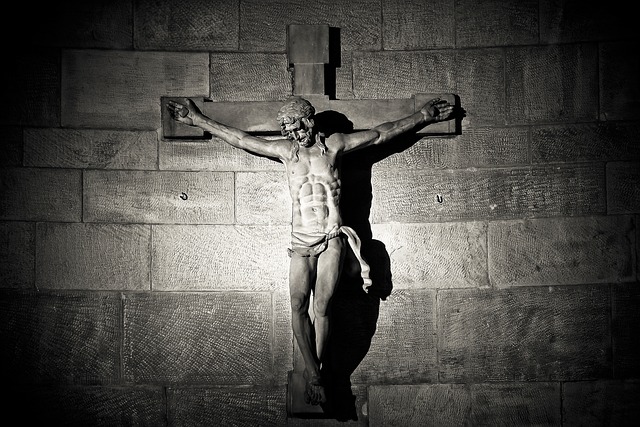
“I have been crucified with Christ and I no longer live, but Christ lives in me.” (Galatians 2:20)
Lent is about stepping into this reality.
- We are not meant to remain on the edges of faith.
- We are not called just to believe in Christ—but to become like him, to let his Spirit fill us so fully that our lives are no longer our own.
The Celtic saints understood this deeply.
- St. Patrick, in his Lorica (Breastplate Prayer), speaks of Christ in him, behind him, before him, within him.
- The early monastic communities sought union with God through prayer, contemplation, and surrender.
This is not just about moral improvement—it is about stepping into the very presence and nature of Christ.
Dying and Rising with Christ—The Lenten Path

Lent is a time of wilderness and trial, mirroring Christ’s 40 days of fasting and temptation. But what was the purpose of his time in the desert?
It was a time of testing—of facing the illusions and temptations of the world and choosing trust in the Father over everything else.
- He rejected the temptation of control (turning stones to bread).
- He rejected the temptation of power (dominion over the kingdoms of the world).
- He rejected the temptation of self-preservation (forcing God’s hand to protect him).
He surrendered everything—and in doing so, he emerged ready to walk the path to the cross.
Lent calls us to the same surrender.
- To release our grip on what is temporary and step into what is eternal.
- To die to fear, self-protection, and ego so that we can truly live in Christ.
- To move from admiring Jesus to becoming like him—not by our own power, but by letting the Holy Spirit reshape us from within.
What Does This Mean for Us Today?
In our daily lives, this call is not easy. It is natural to fear loss, suffering, and uncertainty. But Jesus offers us a different perspective:

“If you consider how long the world existed before you, and how long it will exist after you, you will find that your life is one single day, and your sufferings one single hour.”
This is not to dismiss suffering—but to reframe it.
- Our losses, our struggles, our fears—they are part of a larger journey.
- They are not the final reality.
- The only true reality is God, and when we let go of everything else, we find ourselves already held, already safe, already alive in Christ.
A Lenten Challenge: Scorn Death, Take Thought for Life
Jesus does not tell us to fear death—he tells us to scorn it, to refuse to let fear of loss, suffering, or even mortality keep us from fully living.
So, as you walk through this season of Lent, consider:
- What needs to die in me so that I may rise with Christ?
- Where am I still clinging to control, rather than surrendering to God?
- How can I move from admiration of Christ to transformation in him?
And most of all—
What would change if I lived as if I had already died to everything but God?
This is the path of Lent.
This is the way of transformation.
This is the invitation of Christ.
Let us walk it fully, without hesitation.
Closing Reflection
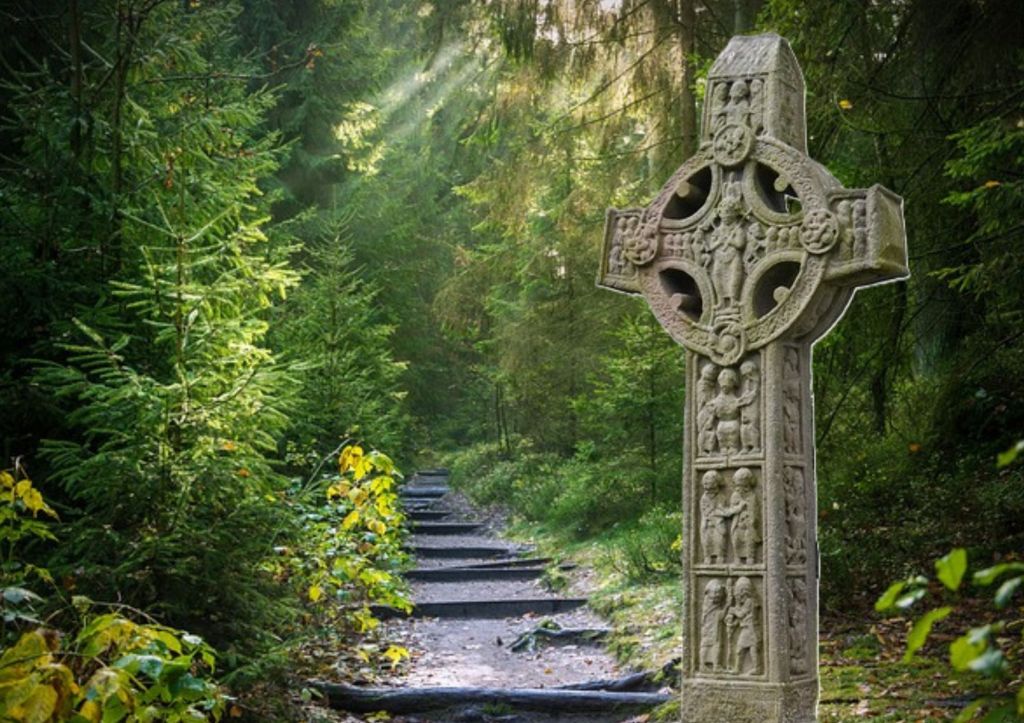
Christ before me, Christ within me, Christ beneath me, Christ above me.
This Lent, may we not just see Christ as our guide—but step fully into his life, trusting that as we die to all that is false, we will rise into all that is real.

 Ancient Whispers
Leave a comment