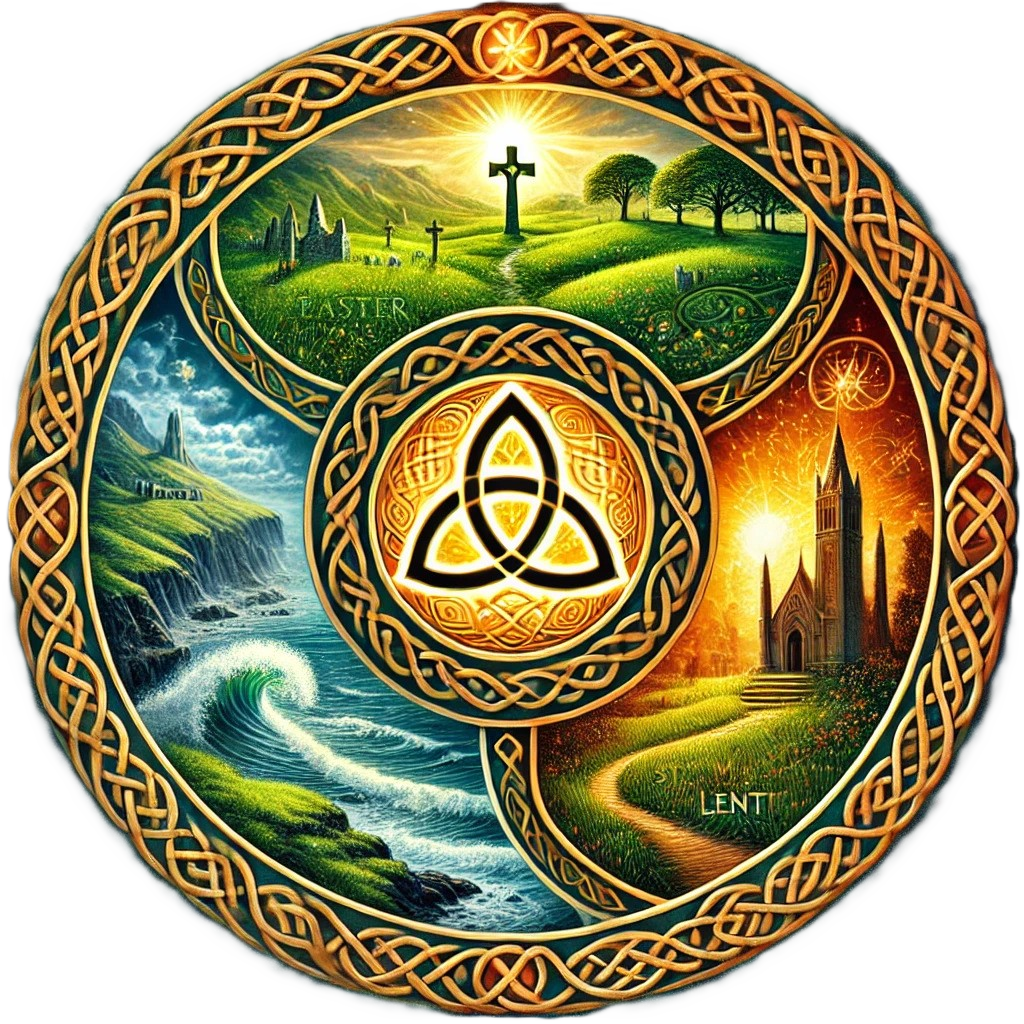
Throughout history, Celtic Christianity has held a profound respect for sacred rhythms—patterns of prayer, pilgrimage, fasting, and contemplation woven into the natural flow of the year. While many are familiar with the traditional Christian season of Lent leading up to Easter, fewer know that the early Celtic Church observed three distinct Lenten periods: Spring Lent (Easter Lent), The Pilgrim’s Lent (starts day after pentecost), and St. Martin’s Lent (Celtic Advent). These three seasons created a deep, cyclical spirituality, fostering a continuous return to reflection, simplicity, and renewal.
A Historical Perspective on the Three Celtic Lents
The practice of observing multiple Lenten fasts was not unique to the Celtic world. In the early Church, additional periods of fasting were common, with early monastic communities incorporating extended times of penitence and contemplation beyond the 40 days before Easter. However, within the Celtic tradition, these additional fasts took on a distinctive character, deeply embedded in nature, seasonal transitions, and the monastic call to retreat and renewal.
1. Easter Lent (Spring Lent)
The best known of the three, Easter Lent, mirrors the universal Christian tradition, lasting 40 days (excluding Sundays) from Ash Wednesday to Holy Saturday. In Celtic tradition, this period was often a time of pilgrimage, both internal and external. Monks would travel to remote islands or wilderness places, mirroring Christ’s time in the desert. Some scholars, such as Kathleen Hughes (The Church in Early Irish Society), suggest that early Irish monks saw Lent as a period of radical detachment—not just from food, but from distractions, comforts, and the egoic self.
2. The Pilgrim’s Lent
The lesser known Summer Lent, is a 40-day period after Pentecost that aligns with early Eastern Christian fasting traditions and was practiced in various Celtic monastic communities, including those following the Rule of St. Columbanus. I call it The Pilgrim’s Lent as for me it reflects sacred wandering, trusting divine guidance, and seeking transformation through movement and contemplation. For Celtic monks, this was a time of retreat, solitude, and fasting from excess rather than food, fostering deep listening—to God, to nature, and to the soul’s stirrings.
Rooted in the Celtic Peregrinatio pro Christo (sacred wandering for Christ), The Pilgrim’s Lent (An Carthannach na nOilithreach) aligns with Pentecost’s energy—the Spirit’s outpouring and the call to mission. More than a journey to a place, it is a surrender to the unknown, an invitation to let the Spirit lead.
3. St. Martin’s Lent (Celtic Advent)
The third fasting season, St. Martin’s Lent, was observed for 40 days leading up to Christmas, beginning on November 15 and concluding on Christmas Eve. This early form of Advent fasting predates the Roman Church’s formalization of Advent as we know it today. St. Martin of Tours, a key figure in early monasticism, was deeply venerated in Celtic lands, and his feast day (November 11) was a significant marker of seasonal transition. St. Martin’s Lent was a time of inner preparation, illumination, and hospitality, aligning with the darkness of winter and the anticipation of Christ’s coming light.
Living the Three Celtic Lents Today

In a world that often feels relentless in its demands, the practice of observing these three Lenten periods offers a counter-cultural rhythm of pause, depth, and sacred recalibration. While few follow these fasts in a strict monastic sense, they can be adapted as seasons of mindful practice, aligning with the natural flow of the year and offering an opportunity for spiritual renewal, simplicity, and intentionality.
How to Approach the Celtic Lents
Observing the three Celtic Lents offers a unique rhythm of spiritual deepening, aligning with the cycles of nature and the inner journey of faith. Each of these seasons invites a different focus, yet they all share the core themes of reflection, simplicity, and renewal. Approaching these periods can be shaped by individual intention and spiritual practice.
- Easter Lent (Spring Lent) – A Pilgrimage of the Soul
- Emphasize movement—both physical and spiritual—as a way of deepening connection.
- Engage with sacred texts or wisdom teachings that speak to transformation and surrender.
- Reflect on the power of speech, silence, and the ways in which words shape reality.
- The Pilgrim’s Lent – The Desert and the Wild
- Seek simplicity, stripping back distractions to focus on presence and inner clarity.
- Spend intentional time in nature, allowing the landscape to guide contemplation.
- Embrace solitude, stillness, or creative expression as a means of deepening awareness.
- St. Martin’s Lent (Celtic Advent) – The Hearth and the Light
- Create a sense of sacred space in daily life, recognizing home and heart as places of divine encounter.
- Reflect on themes of generosity, hospitality, and the illumination found in darkness.
- Focus on preparing inwardly for renewal, drawing from wisdom traditions that speak of light and incarnation.

Rather than strict adherence to a set practice, the Celtic Lents invite a fluid and personal approach—one that allows for both structure and spontaneity, tradition and intuition. Whether through prayer, study, fasting, creative expression, or acts of service, each person can shape these seasons in a way that resonates most deeply with their journey.
An Invitation to Take Up the Practice
If you feel drawn to a deeper, more cyclical spiritual practice, I invite you to explore these three Lenten periods in your own way. You don’t have to follow rigid fasting rules or withdraw into the wilderness, but you might consider:
- Setting aside each of these seasons for deeper prayer, reflection, or study
- Choosing a theme for each Lent that resonates with your spiritual journey
- Engaging in small acts of intentionality—whether through pilgrimage, silence, generosity, or simplicity
The wisdom of the Celtic tradition reminds us that faith is not confined to one season of fasting and renewal—it is a journey, a rhythm, and a way of life. By embracing the three Celtic Lents, we step into a sacred cycle of transformation, attuning our hearts to the natural and divine movement of the year.
Would you consider taking up this practice? What might these sacred seasons look like for you?
You can download a copy of my plan for 2025 here:
 Ancient Whispers
Leave a comment