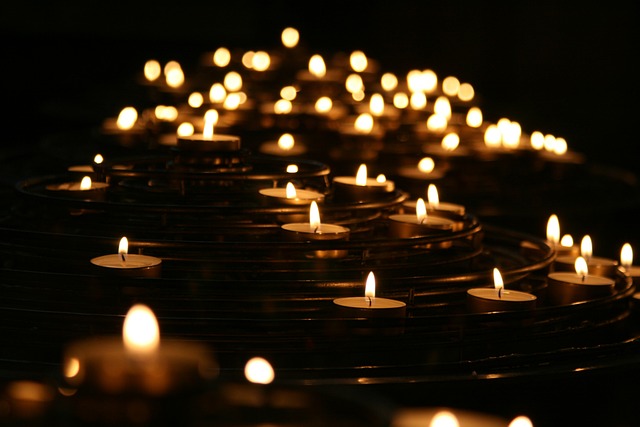
There is something about the light of a candle that holds our gaze. It flickers, it dances, it bends and bows to unseen currents of air—and yet, it remains alight. This quiet persistence, this gentle radiance, is at the heart of Candlemas, a feast that speaks of dedication, renewal, and the light of Christ that no darkness can overcome.
More than just a commemoration of an event in the Temple, Candlemas is a threshold moment—a bridge between winter and spring, between expectation and revelation, between old ways of seeing and new ways of understanding. In the Celtic Christian tradition, thresholds were sacred; they were places of encounter, where the veil between worlds grew thin, where the Divine met us in the space between.
Candlemas, then, is not just a date on the calendar. It is an invitation.
The Sacred Threshold: Meeting Christ in the Temple
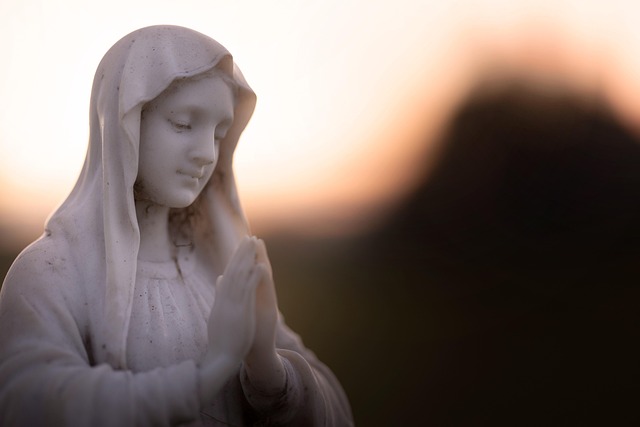
The origins of Candlemas lie in Luke 2:22-40, where Mary and Joseph, following Jewish law, bring the infant Jesus to the Temple for purification and dedication. There, they are met by two figures: Simeon, an old man who had been waiting for the Messiah, and Anna, a prophetess who lived in the Temple, fasting and praying.
Simeon’s words are some of the most powerful in Scripture:
“Lord, now let Your servant depart in peace, according to Your word.
For my eyes have seen Your salvation, which You have prepared in the presence of all peoples—
A light to lighten the Gentiles and the glory of Your people Israel.” (Luke 2:29-32)
This is a threshold moment—not just for Simeon, who has waited his whole life to see this day—but for all humanity. Jesus is recognized as the Light of the World, the one who will break through spiritual darkness. But the moment is not without cost. Simeon warns Mary that her child’s mission will be one of suffering:
“This child is destined to cause the falling and rising of many in Israel… and a sword will pierce your own soul too.” (Luke 2:34-35)
The light shines, but not without challenge. Revelation comes, but not without disruption. Candlemas is a feast of light, but it is not a feast of ease.
Purification and Renewal: The Call of Candlemas
For Mary, this was not just a presentation but a moment of purification, aligning with Jewish law (Leviticus 12). Purification in biblical times was about restoration—about stepping forward after a significant moment, re-entering the world with a new sense of purpose.
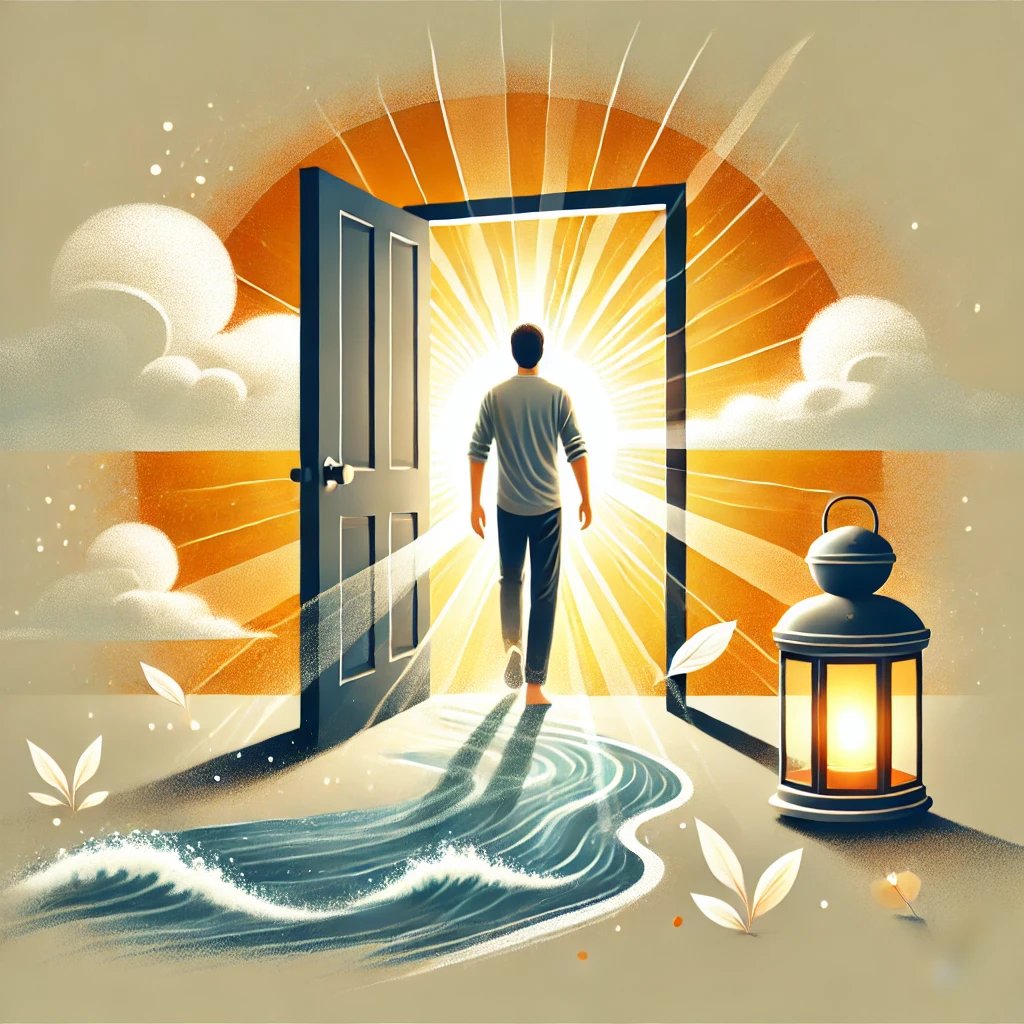
For us, Candlemas asks a difficult question:
What needs purifying in our own hearts? What burdens do we still carry that prevent us from stepping into the light?
The Celtic tradition deeply understood this call to renewal. St. Brigid, whose feast just precedes Candlemas on February 1st, was not only associated with fire and light but with purification. Her traditions include rituals of water, cleansing, and preparation for new life—mirroring the call of Candlemas to step forward into newness.
Brigid’s threshold was the firelit hearth, where hospitality, service, and transformation met. Simeon’s threshold was the Temple, where he saw salvation before stepping into eternity. The question for us is: where is our threshold? Where is God calling us to step forward in faith, carrying light into the unknown?
The Light That Cannot Be Contained
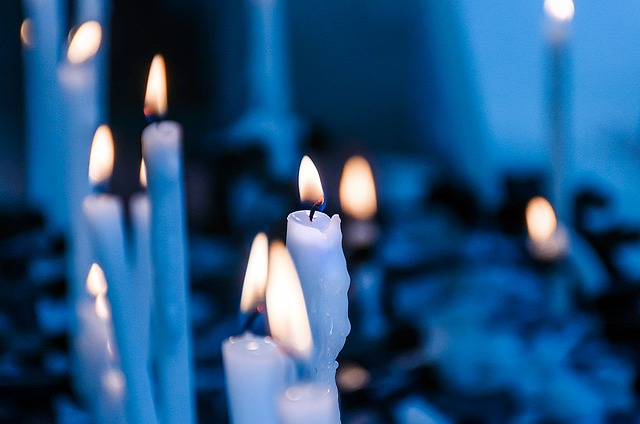
One of the oldest traditions of Candlemas is the blessing of candles—a practice that has its roots in the 5th century. These candles were then taken home, placed in windows, or kept for moments of prayer. In rural traditions, a lit Candlemas candle was a sign of hope during storms, a reminder that no matter how fierce the winds, the light still burned.
In the Celtic Christian tradition, light was never just a metaphor—it was a sacramental reality. The fire of a hearth, the glow of a lantern, the flicker of a candle—each was a reminder of God’s presence, something not to be contained but carried.
This is what Jesus meant when He said:
“You are the light of the world. A city on a hill cannot be hidden. Neither do people light a lamp and put it under a basket. Instead, they set it on a stand, and it gives light to everyone in the house.” (Matthew 5:14-15)
Candlemas asks us: Are we willing to be light-bearers? To carry the fire of God’s presence into places of darkness?
Candlemas and the Turning of the Seasons
It is no coincidence that Candlemas falls at a natural turning point—midway between the winter solstice and the spring equinox. It aligns with Imbolc, the Celtic festival marking the first signs of spring. The two celebrations share deep commonalities:
🌱 A shift from darkness to light – The first stirrings of spring mirror the recognition of Christ as the Light of the World.
🔥 The presence of fire – Imbolc was a time of lighting flames, just as Candlemas became a feast of candlelight.
💧 Themes of purification – In both traditions, this time of year marked a clearing away—of the old, the stagnant, the burdensome—to prepare for what is to come.
Both Imbolc and Candlemas remind us that light is already returning, even when winter is not yet over.
Living the Light of Candlemas
The feast of Candlemas is not just about remembering an ancient event; it is about entering into its reality. We, too, stand at a threshold. The world remains noisy, restless, full of shadows. But the light shines, and the darkness has not overcome it (John 1:5).
So how do we step forward?
🔥 Blessing the Light – Whether lighting a candle or simply pausing to acknowledge God’s presence, we can reclaim the sacredness of small flames.
🔥 Carrying the Light – Through acts of kindness, justice, and compassion, we bring the radiance of Christ into the lives of others.
🔥 Trusting the Light – Even when darkness lingers, even when the road is uncertain, we choose to trust that the light will not be extinguished.
Like Simeon, we hold the light in our hands. Like Anna, we proclaim what we have seen. Like Brigid, we step forward into a new season.
The gate is open. The flame is lit. The question is: Will we carry it forward?
How do you experience the light of Christ in your life? What traditions of Candlemas or Imbolc resonate with you? Let’s continue the conversation.
 Ancient Whispers
Leave a comment