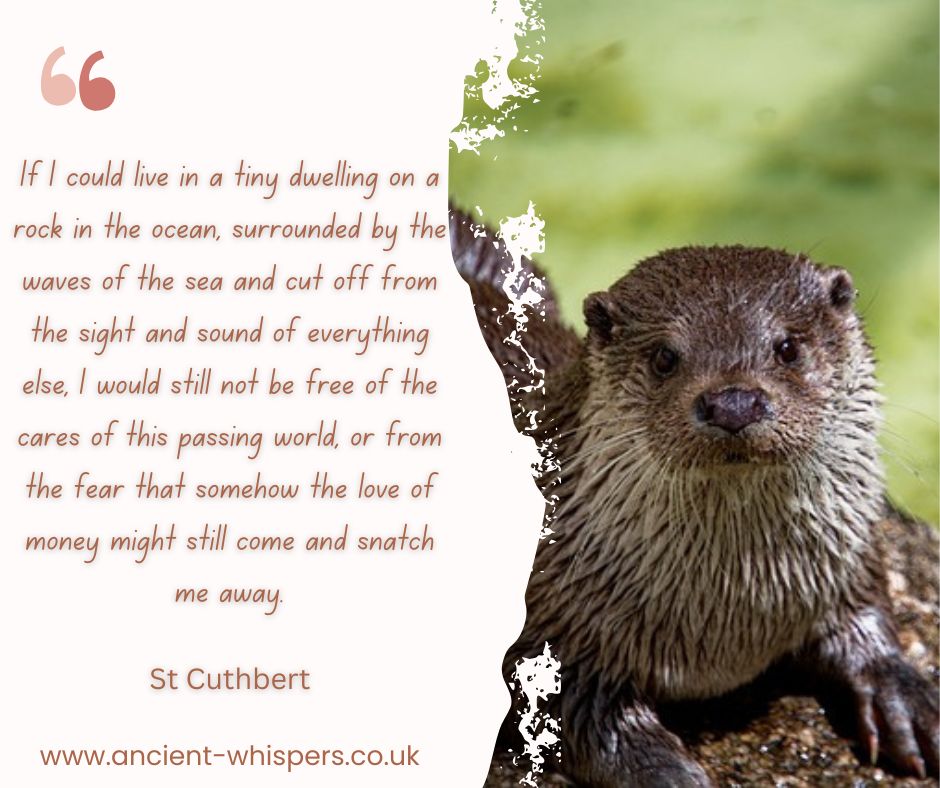
St. Cuthbert’s longing for a life of simplicity—expressed in his famous words about dwelling on a rock in the ocean—invites us to reflect on the nature of peace, freedom, and the deeper work of the soul. At first glance, his desire to live apart from the world’s noise and distractions might seem like the ultimate solution to finding inner peace. But his realization that even such solitude would not free him from the cares of the world reveals something profound: the journey to freedom is not about where we are but who we are becoming.
Let us explore this idea further, drawing on the rich wisdom of Celtic Christianity and the call to live a life aligned with the Kingdom of God.
The Illusion of Escape
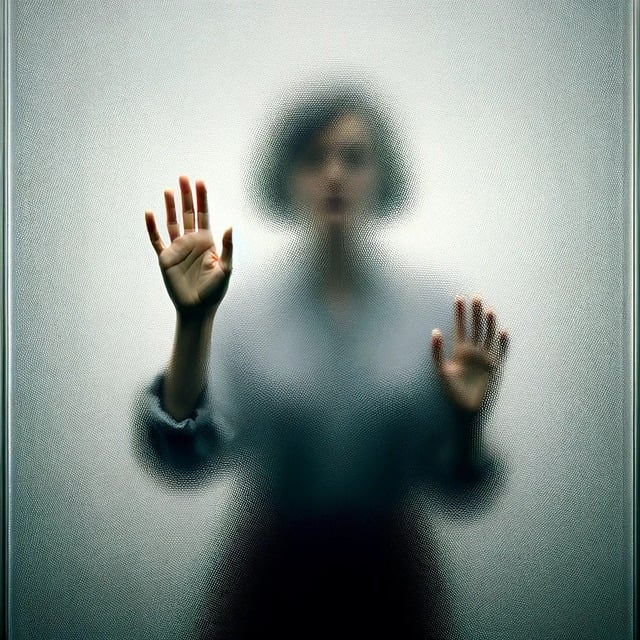
Cuthbert’s words remind us of a universal temptation: the belief that peace can be found in escaping our circumstances. How often do we dream of a quieter life, imagining that if only we could step away from the demands of the world—the deadlines, the relationships, the responsibilities—we would finally find rest?
Celtic saints like Cuthbert often sought solitude as a way to deepen their connection with God. They would retreat to isolated islands, hermitages, and rocky outposts, following the example of Christ, who withdrew to pray in the wilderness. Yet, even in these sacred spaces, the saints recognized that the external world was not the true source of their struggles. As Cuthbert acknowledges, the cares of the passing world—fear, desire, and attachment—are carried within us. They are part of the human condition and cannot be escaped by simply changing our surroundings.
This insight speaks to us today, as we often search for peace in external solutions: a different job, a new relationship, or even a secluded retreat. These changes may provide temporary relief, but unless we address the deeper currents within us, we will find that the same struggles resurface, no matter where we go.
The Battle Within
Cuthbert’s reflection on the “love of money” highlights a specific and enduring human challenge: the tendency to seek security in things that ultimately cannot satisfy. Money, in this context, symbolizes more than wealth; it represents all the things we cling to in an attempt to feel safe, valued, or powerful.
The fear Cuthbert describes—that even in the most remote solitude, the love of money might “snatch him away”—is not about material possessions themselves but about the attachment of the heart. This is a deeply biblical theme. Jesus teaches us that “where your treasure is, there your heart will be also” (Matthew 6:21). The heart’s attachments shape our lives, determining whether we are free to follow God’s call or bound by the weight of worldly cares.

The Celtic Christian tradition often emphasizes the idea of the “battle within”—the inner work of the soul that requires us to confront our fears, desires, and attachments. This inner struggle is not a sign of failure but a necessary part of the journey. As the Apostle Paul writes, “Be transformed by the renewing of your mind” (Romans 12:2). Transformation begins within, as we surrender our attachments and open our hearts to God’s grace.
The Rock and the Ocean
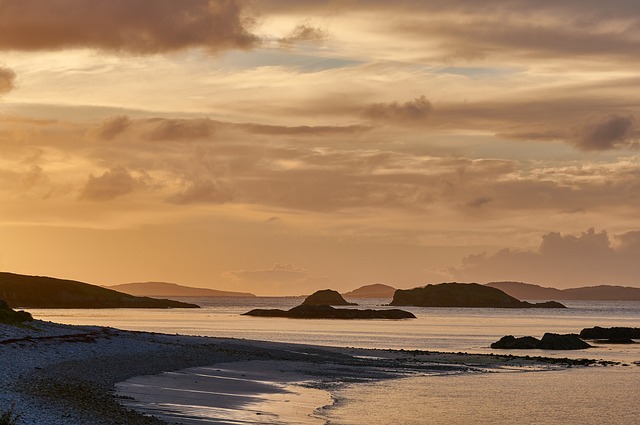
The imagery of a tiny dwelling on a rock surrounded by the ocean is a powerful metaphor for the spiritual life. The rock represents stability, the foundation of faith, and the presence of God. The ocean, with its ceaseless waves, symbolizes the challenges and distractions of life—the cares of the world that continually press against us.
In Celtic spirituality, the sea often represents both the unknown and the boundary between the earthly and the divine. To dwell on the rock in the midst of the ocean is to live at the edge of the world, where heaven and earth meet. It is a place of profound beauty and vulnerability, a reminder that true peace is not found in avoiding the waves but in anchoring ourselves to the rock.
Psalm 61:2 captures this beautifully: “Lead me to the rock that is higher than I.” The rock is not a place of escape but a place of refuge, where we can stand firm amidst life’s storms. To live on the rock is to trust in God’s presence and strength, even when the waves crash around us.
Seeking Simplicity

Cuthbert’s longing for simplicity resonates deeply in a world that often feels overwhelming. The modern age is filled with noise—not just the literal noise of technology and busyness but the inner noise of worry, comparison, and striving. The call to simplicity is not about rejecting the world but about finding clarity and focus amidst its complexities.
The Celtic saints practiced a radical form of simplicity, not as an end in itself but as a way to create space for God. Their lives were marked by humility, gratitude, and a deep awareness of the sacred in the ordinary. This simplicity is not about having less but about needing less, about freeing the heart from attachments that weigh it down.
How can we embrace simplicity in our own lives? Perhaps it begins with asking what truly matters. What are the cares and fears that occupy our hearts? What would it mean to let them go and trust in God’s provision?
The Freedom of Detachment
Cuthbert’s insight—that even solitude cannot free us from the love of money or the cares of the world—points to the deeper work of detachment. In the Christian tradition, detachment is not about rejecting the world but about being free to love it rightly. It is the freedom to hold all things lightly, knowing that our ultimate security and identity are found in God.
This freedom is beautifully expressed in the Celtic Christian prayer known as the Lorica, or “breastplate prayer,” attributed to St. Patrick:
“Christ with me, Christ before me, Christ behind me, Christ in me…”
To live in this way is to be so rooted in God’s presence that the cares of the world lose their power over us. It is to dwell on the rock, not as an escape but as a place of strength and peace.
The Kingdom’s Work
Ultimately, Cuthbert’s reflection calls us to the work of the Kingdom—the inner and outer work of aligning our lives with God’s purposes. The Kingdom of God is not about withdrawing from the world but about transforming it, beginning with our own hearts. It is about living in a way that reflects God’s love, grace, and peace, even amidst the challenges of life.
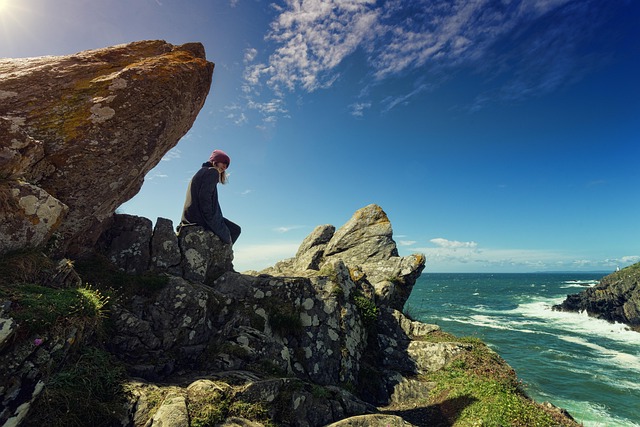
This work requires courage, for it asks us to face our fears and attachments honestly. It asks us to trust in God’s goodness, even when the waves feel overwhelming. But as we take each step, we discover a freedom and joy that cannot be shaken, a peace that surpasses understanding.
A Reflection for Today
As we consider Cuthbert’s wisdom, let us take a moment to reflect:
- What are the waves that press against us, the cares and fears that occupy our hearts?
- Where is the “rock” in our lives, the place where we find stability and refuge?
- How might we create space for simplicity, trusting that God’s grace is enough?
Celtic Christianity teaches us that every moment, every place, is infused with the presence of God. Whether we dwell on a rock in the ocean or in the midst of a bustling city, we are invited to anchor ourselves in that presence, to let go of what weighs us down, and to live with open hearts.

May we, like St. Cuthbert, seek the freedom that comes not from escape but from surrender—a freedom that allows us to live fully and faithfully, grounded in the eternal love of God.
 Ancient Whispers
Leave a comment