“Out of the depths I cry to you, O Lord; Lord, hear my voice.” – Psalm 130:1

There is a haunting beauty in this cry from the psalmist, a raw and unfiltered plea that resonates across centuries. It is the sound of a soul laying bare its vulnerability, reaching out from a place where darkness and silence converge. Yet, beneath the words lies a profound truth: it is only in these depths that transformation begins.
In the still, hidden places of our being, where our fears, pain, and doubts dwell, there is an invitation—not to escape—but to listen. This is the paradox of the depths: they are both a place of despair and a cradle of transformation. When we dare to cry out, when we attune ourselves to the voice within, we plant the seeds of renewal.
The Depths as Sacred Ground
The Celtic Christian tradition often speaks of thin places, where the veil between the physical and the spiritual feels especially translucent. But what if the depths of our soul—those places we’d rather avoid—are also thin places? What if the darkness itself holds the potential for divine encounter?
John O’Donohue writes, “To be human is to become visible while carrying what is hidden as a gift to others.” In our depths, we confront what is hidden: the fears we’ve suppressed, the wounds we’ve ignored, the longings we’ve silenced. This confrontation is not a punishment; it is a sacred call to become visible, first to ourselves, and then to the divine.
Listening to the Cry
The psalmist doesn’t merely cry out; they ask to be heard. “Lord, hear my voice.” This plea is not just about speaking—it’s about connection, the deep human need to be known and understood. How often do we cry out in our own lives, not with words, but through the ache of a restless heart, the heaviness of unspoken pain, or the quiet desperation of longing?
Yet, how often do we also turn away from our own cries? The noise of modern life—the relentless scroll of social media, the numbing comforts of distraction—drowns out the voice of our soul. Listening to our depths requires courage, for what we hear may challenge us. It may ask us to change, to let go, to forgive.

This is where the wisdom of silence enters. In the stillness, the cry of the soul can rise and be heard—not as something to fix, but as something to honor. Celtic spirituality reveres silence as a meeting place with God, a space where we can “be still and know” (Psalm 46:10). In this silence, the cry becomes a dialogue, and the depths become fertile ground for growth.
The Transformational Power of the Depths
Transformation does not begin on the mountaintop; it begins in the valley. It begins in the cry that admits, “I cannot do this alone.” This is the heart of changework—the recognition that our struggles are not barriers to growth but invitations to it.
Consider these words from the mystic Julian of Norwich: “Our wounds are our trophies.” The depths, with all their pain and uncertainty, are not evidence of failure; they are evidence of life. They are the places where our resilience is born, where our spirit is forged. Just as the psalmist’s cry is not the end of the story, neither are our depths. They are a beginning—a sacred alchemy where despair can be transformed into hope, and fear into trust.
Practical Steps: Listening to Your Depths
If the cry of the soul is an invitation, how do we accept it? How do we begin to listen to the depths?
- Create Space for Stillness
Find a quiet place where you can sit without distraction. Light a candle, symbolizing the light of hope within the darkness. Close your eyes, take deep breaths, and let the noise of the world fade. Ask yourself: What is my soul crying out for right now? - Write Your Cry
Take a journal and let the words flow without judgment. Write as though speaking directly to the divine, as the psalmist did. What emotions rise? What words come easily? What feels too heavy to name? - Meditate on the Depths
Imagine yourself descending into a well, deep into your inner being. In the stillness of the depths, picture meeting the cry of your soul—not as an enemy, but as a companion. Ask it what it needs and listen without resistance. - Practice Forgiveness
Forgiveness often emerges as a theme in the depths. Whether forgiving yourself, others, or even life itself, this act releases the chains that keep you bound. As Psalm 130 says, “If you, Lord, kept a record of sins, Lord, who could stand?” Forgiveness is not forgetting—it is freedom.
Hope as an Anchor
The psalmist’s cry does not end in despair but in hope: “I wait for the Lord, my whole being waits, and in his word I put my hope.” Hope is not a naive optimism; it is an anchor in the storm, a trust that the depths are not the end.

In Celtic tradition, hope is often symbolized by the salmon swimming upstream—a creature that defies the odds, moving against the current to return to its source. This is the essence of Psalm 130: a return to the source, a journey through the depths back to light.
The Seeds of Transformation
The cry of the soul is not a weakness; it is a sacred call to transformation. When we listen, when we honor the depths instead of fleeing them, we step into a process of renewal. Just as seeds must be buried in darkness to grow, so must we enter our depths to rise anew.

Take heart in the psalmist’s journey. Out of the depths comes a cry, but also a promise: “With the Lord is unfailing love and with him is full redemption” (Psalm 130:7). Let this promise be a seed planted in your own soul, a reminder that even in your darkest moments, the light of transformation is already at work.
The Complete Transformative Gospel Series:

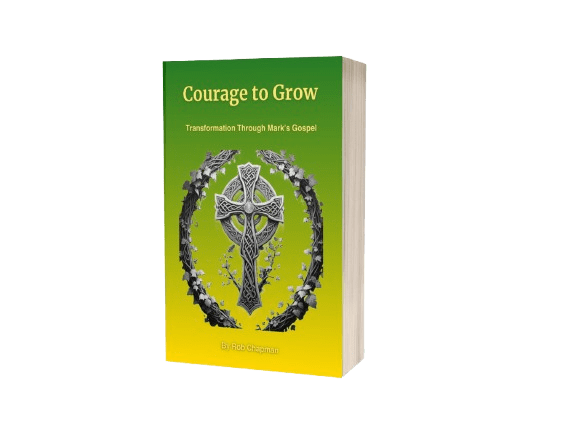


Click the image to discover more.
 Ancient Whispers
Leave a comment