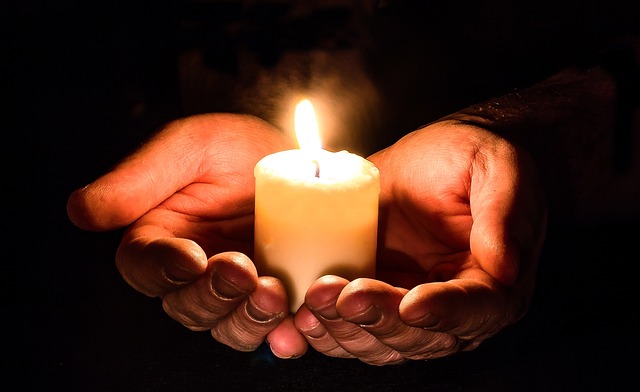
There are moments, sometimes unexpected, where we catch a glimpse—a feeling, perhaps—that suggests the presence of something larger than ourselves, something woven into the fabric of our being yet remaining elusive. This sensation, though often fleeting, can leave us yearning to reach beyond the known, to uncover the nature of what some may call God. It’s here, in this beautiful paradox, that we begin to explore a mystery that can only be sensed and felt, rather than fully understood.
When we speak of God, we often lean on images, stories, and language passed down through centuries. The prayers, the hymns, the stories—each feels like a doorway, inviting us to peer through and discover a glimpse of the divine. But each door opens to something both familiar and mysterious, something that we can sense deeply without ever quite holding in our grasp. In this way, God becomes a presence that is both intimate and boundless, close yet unknowable.

This sense of divine mystery is often most evident in quiet, reflective moments. The words of a simple prayer, a phrase drawn from an ancient text, or a few moments of silence—each becomes a gesture, a gentle pointing toward God, like the way one might point to the stars rather than attempt to capture them. In these moments, language does not seek to explain but to gesture toward something beyond itself, something that asks us to step closer, to wonder.
Perhaps it is in this artful vagueness, this leaving of space, that God can be most profoundly felt. The words we use are carefully chosen, yet there is a gentleness in their intent, as if the words themselves know they cannot fully contain the mystery they seek to convey. There is, in these quiet spaces, an understanding that each person who speaks a prayer, listens, or reflects is meeting God in their own way. For some, God is sensed in the flickering of candlelight; for others, in a silent moment or the gentle strain of a melody. And for many, God is found in the silence between words, in the spaces left unfilled.

In these moments, there is a whisper that some might call God’s voice. It does not speak in clear terms or with the clarity of human speech. Instead, it drifts into our awareness like the softest brush of wind, a suggestion more than a command, a presence more than a sound. We listen not with our ears but with our hearts, tuning into that subtle invitation, one that asks us to come closer, to feel deeply, to let go of the need for clear answers.
This path of seeking God is not a matter of pressing for certainty but of dwelling in possibility. God, as encountered in this way, is as near as a breath yet as distant as the stars. In every word spoken and every quiet pause, we are reminded that God’s presence surpasses understanding. This awareness is not unsettling but liberating, for it releases us from the need to define God. Instead, we are invited to explore, to seek, and to experience. There is a beauty in this ambiguity, a grace in knowing that we can never fully know, that the search itself may be the very thing that draws us closer.
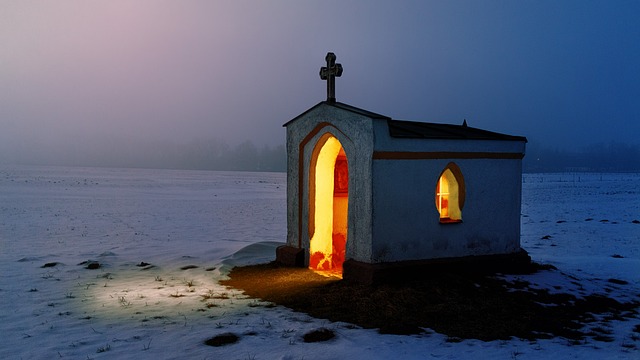
Consider, for a moment, the feeling of stepping into a quiet, reflective space. The tall ceilings, the soft glow of a candle, the stillness—all contribute to a sense of reverence, a feeling that something sacred is present here. But what is it that makes it sacred? Is it the physical space, the symbols, the echoes of voices past? Or is it something more subtle, something intangible that stirs within us? This experience invites us to engage with mystery without rushing to resolve it. Here, God is felt in the slow, deliberate rhythm of quiet moments, in phrases that become like mantras, in the stillness where our own thoughts fade and something deeper, something divine, seems to emerge.
This is the invitation of silence and reflection—to meet God not as a distant authority but as a gentle whisper within, a presence we sense rather than understand. And in this sense, each person’s experience of God is uniquely their own. While we might share a common language, a set of words, or a time of reflection, we each bring our own questions, our own longings, our own encounters. God seems to adapt to each heart, meeting each of us precisely where we are, without expectation, without demand, and perhaps most beautifully, without answers. For in this space of unknowing, we find the freedom to connect with God in ways that feel deeply personal, deeply authentic.

There is a humility in approaching God this way, a recognition that no single description or phrase could ever encompass the divine. This humility does not diminish faith; rather, it strengthens it, for it reminds us that faith is a journey, a relationship that grows and deepens with time. And in the gaps, in the spaces left open by our limited language, God’s presence can be felt, sensed, known in ways that words could never capture. We speak of God, yes, but we also fall silent before God, knowing that in our silence, we are perhaps closest to the truth.

Imagine, if you will, the way a candle flickers in the dark. It gives light, yes, but its flame is always shifting, dancing, never quite still. God, too, is like this—a light that guides, yet never stands still, a presence that can be sensed but never pinned down. This is the mystery we hold dear: that God is both with us and beyond us, a light that illuminates but also casts shadows, inviting us to explore both the known and the unknown.
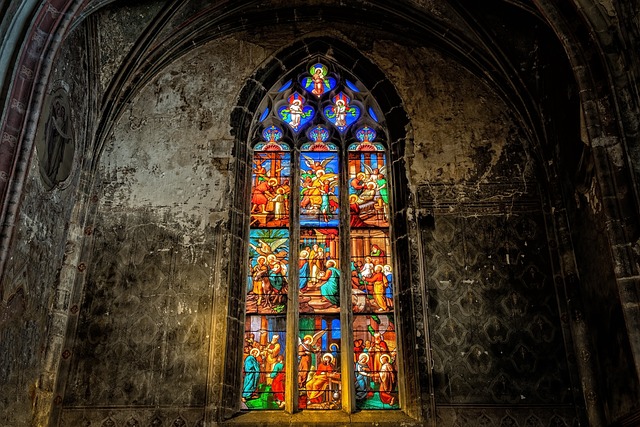
In the end, experiencing God may be less about certainty and more about openness. It is an invitation to sit in the mystery, to breathe deeply, to feel the sacredness in every moment, every gesture, every whispered word. It is an acknowledgment that God may be beyond description, but that does not make God any less real. Rather, it opens up the possibility that God is even more present, more intimate, for we meet God not in the definitions we impose but in the spaces we leave open.

So as you read this, consider how God might be speaking to you now—not in the words you read, but in the feelings that arise, in the thoughts that drift through, in the sense of presence that lingers. This is the heart of faith, the gentle reminder that God is with us, not as a concept to be understood but as a presence to be felt. And perhaps, in this feeling, we find all the understanding we need.
 Ancient Whispers
Leave a comment